BRUSSELS — Humanitarian organizations in Gaza say they are days away from an impossible choice: Comply with Israeli rules to hand over data on staff and funding — including information on Palestinian employees — or be banned from operating in Gaza and the West Bank.
The rules, announced in December, require foreign aid groups to register and to provide detailed personal information about employees and donors. They are due to come into force as early as Sunday and around 37 organizations, including Doctors Without Borders and Oxfam, say they have been told they risk losing access to Palestinian territories if they do not comply.
Europe-based humanitarian organizations are fighting back before Israeli courts, saying the demands are unlawful under European law. They are urgently pressing EU institutions to intervene before the rules are enforced.
They say that if they comply, staff could fall under surveillance and be targeted by Israeli forces and that if they withdraw from the territories, Palestinians would lose access to life-saving aid.
On Tuesday, NGOs filed a petition with Israel’s High Court seeking to suspend the measures, arguing in part that transferring the data would be “a criminal and administrative offense” under EU law and would expose them to fines under the General Data Protection Regulation.
Israel’s ministry for diaspora affairs and combating antisemitism has said the rules aim to facilitate humanitarian support to Palestinians while “preventing the misuse of humanitarian cover for hostile activities and terrorism.”
The Israeli ministry of foreign affairs, the government’s coordinator of government activities in the territories and the prime minister’s office did not respond to POLITICO’s requests for comment. The Ministry of Justice and Ministry of Defense directed the request to other departments in the Israeli government. Israel’s Privacy Protection Authority did not respond to a request for comment.
Marwa Fatafta, who leads digital rights group Access Now’s work on the Middle East, said “the type of information that Israel is requiring from international NGOs are far-reaching, beyond any legitimate purpose.”
Mirte Bosch, a conflict and humanitarian adviser for Oxfam, said that if her organization were to adhere to the Israeli request it would be forced to “violate national and EU data protection laws.”
The aid groups’ position has the backing of some European data protection officials. Aleid Wolfsen, chair of the Netherlands’ privacy authority, said “anyone who demands such data must convincingly demonstrate that misuse and leaks are genuinely prevented,” and that with the Israeli law “we do not see those safeguards sufficiently and clearly in place.”
The GDPR limits what personal data can be shared with foreign governments, demanding that the purpose of the data sharing be clearly defined and that only a minimum amount of data is shared to protect people’s privacy.
Wolfsen’s authority in August cautioned that if aid organizations were to hand over all the information required by Israel, they would “almost certainly violate the privacy rights of employees and their family members.”
The measure can have “direct consequences for the physical safety of humanitarian workers and their family members,” the Dutch data protection authority said.
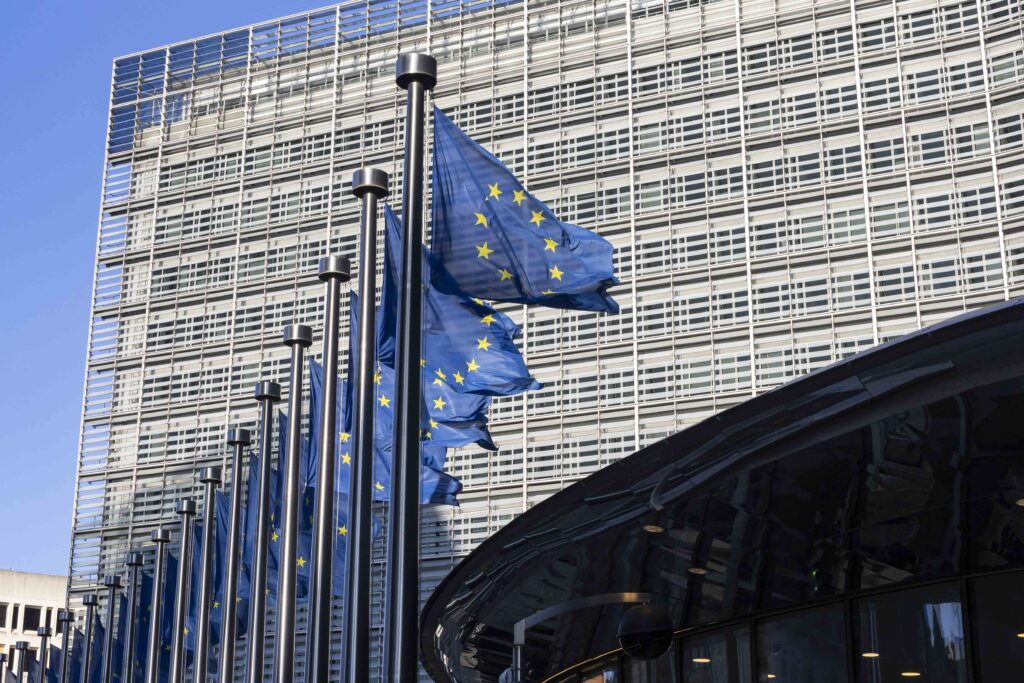
Israel’s law has also drawn condemnation from the European Commission. In a statement, the Commission said: “The EU has been clear: barriers to humanitarian access must be lifted. Israel’s plans to block NGOs in Gaza means blocking life-saving aid.”
The Commission is “closely monitoring the situation and is engaging with its partners,” the statement said.
Fear of attacks
In January, more than 50 international NGOs raised the alarm over the new registration rules, which start to take effect from Feb. 28 onward.
While Palestinian authorities operate their own process for international NGOs to register, Israel maintains tight control of aid and people flowing in and out of Gaza — meaning international NGOs that don’t meet Israel’s rules could be blocked from providing aid.
Humanitarian support will “completely collapse” in March if the Israeli measures are not reversed, said Louise Le Bret, advocacy coordinator with the Danish Refugee Council (DRC).
“International NGOs are the backbone of the Gazan population’s survival,” she said. The DRC is Denmark’s largest NGO, one of the largest operators in Gaza, and one of the 37 organizations that has said they risk losing access to Palestinian territories.
Elsa Softic, the deputy chief of operations at French NGO Première Urgence Internationale, which provides aid in Gaza, East Jerusalem and the West Bank, said her organization had “serious concerns about what [Israel] are going to do with this data.”
More than 580 aid workers have been killed in Gaza since the conflict started on Oct. 7, 2023, according to the United Nations. The U.N.’s Palestinian refugee agency, UNRWA, has said the “vast majority” of its staff who have died were killed by Israeli forces.
Israeli officials have previously denied deliberately targeting humanitarian workers with military strikes and have claimed militants have disguised themselves as aid workers.
Israel is a world leader in surveillance technology and military technology, and is the home of companies including spyware maker NSO Group. Its use of data to surveil Palestinians has been documented by rights groups Amnesty International, 7amleh and others.
“We unfortunately have ample evidence that humanitarian workers have been systematically targeted, including who actually have been killed after getting specific approval by Israel authorities to conduct a humanitarian mission, after actually getting the guarantees of not being targeted, and yet they were targeted,” said Bosch from Oxfam.
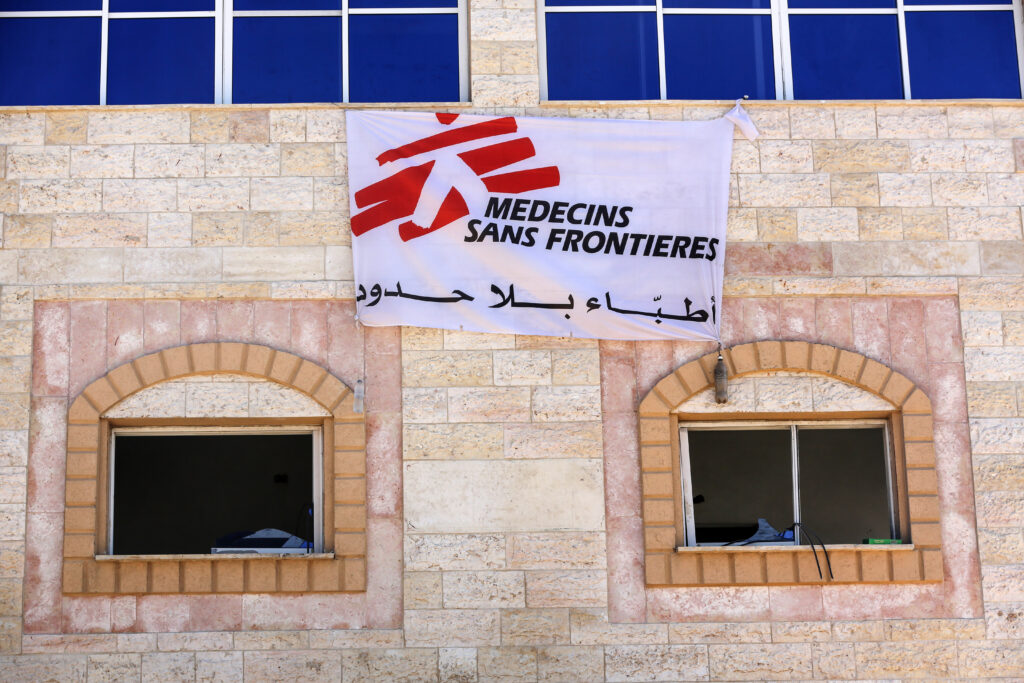
In January, Doctors Without Borders said it would be willing to share certain staff data with Israeli authorities as an “exceptional measure” to “continue providing critical medical care” in Palestinian territories. But the NGO quickly backtracked, saying it could not get assurance from Israeli authorities that the data “would be used only for its stated administrative purpose and would not put colleagues at risk.”
Data deals
Aid groups are also pointing to the wider ramifications for data privacy.
Lama Nazeeh, advocacy manager at Palestinian digital rights group 7Amleh, said the EU and its countries need to address “the privacy and data protection risks created by coercive disclosure demands, and ensure that international law is enforced.”
“If the EU does not take any position and no clear action, frankly, when its own humanitarian partners are forced to violate these laws, then the consequence is that we’re eroding these laws,” said Oxfam’s Bosch.
Aid workers note that the European Commission maintains a so-called “adequacy decision” with Israel — a seal of approval for Israel’s privacy framework that shows the Commission views it as on par with the EU’s GDPR.
“How on earth does Israel fulfill the adequacy requirements, to say that it is a safe country for the EU to transfer data back and forth?” said Fatafta of Access Now.
Regarding the adequacy partnership with Israel, the Commission “closely monitors its application and has tools at its disposal to respond if the level of protection afforded to data transferred from the EU is weakened,” the EU executive said.
Anouar El Anouni, a spokesperson for the EU’s External Action Service, said in an earlier statement mid February that “a number of EU measures” to stop the February requirements were still being considered.
The EU has “actively engaged” with Israel on the issue, he said, and “will continue to monitor the situation, looking into how to facilitate the registration support, and further engage with Israeli authorities.”
In January, the EU’s top diplomat Kaja Kallas and commissioners Hadja Lahbib and Dubravka Šuica called on Israel “not to implement” the registration law “in its current form.”
They warned of “further loss of life in Gaza” if international aid organizations are shut out.
Rory O’Neill contributed to this report.

Europa Monitor is a seasoned News Editor with over a decade of experience in journalism. Known for his editorial expertise and commitment to accuracy, Europa Monitor leads teams to deliver high-quality news content.