Americans are increasingly critical of the U.S.’s monthlong war in Iran, according to several polls released Wednesday, with prices at the pump remaining high and fears of a wider conflict growing.
Sixty-one percent of respondents in a Pew Research Center poll said they disapprove of the president’s handling of the conflict, which President Donald Trump kicked off in tandem with Israeli President Benjamin Netanyahu at the end of February. A separate poll conducted by Quinnipiac showed that 42 percent of registered voters believe the war will make the world less safe, with just 35 percent believing it will make the world safer.
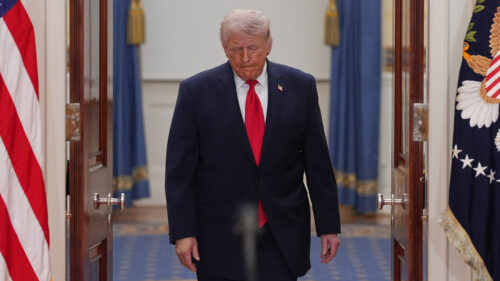
The polls come as the president this week signaled a pull-back on parts of the operation against Tehran. Trump on Monday announced a pause on “any and all military strikes against Iranian power plants and energy infrastructure” due to “very good and productive conversations” between negotiators on the two sides.
Republicans and Democrats remain at odds over the president’s military moves. Seventy-eight percent of Republicans told Pew that the war was going somewhat or very well, compared to 29 percent of Democrats.
“From the outset, President Trump and the Department of War estimated it would take approximately four to six weeks to achieve this critical mission,” White House press secretary Karoline Leavitt said in a briefing Wednesday. “Twenty five days in, the greatest military the world has ever known is ahead of schedule and performing exceptionally.”
Trump’s visit to China, postponed when the war began, has been rescheduled for mid-May, Leavitt said.
But while White House officials have this week projected optimism that the conflict is nearing an end, the Pentagon is preparing plans to deploy 3,000 more troops to the Middle East from the Army’s 82nd Airborne Division.
The fighting has also threatened affordability, a key agenda item for the president ahead of the November midterm elections. Gas prices have continued to spike, as the Strait of Hormuz remains closed due to the specter of attacks from Iranian forces.
With that backdrop, 45 percent of U.S. adults in an AP-NORC poll released Wednesday said they are either “extremely” or “very” concerned about the prospects of affording gas over the next few months.
But the White House insisted that prices would decrease once military operations wind down.
“The president has said once these combat operations are over, this administration is going to continue to unleash American energy dominance,” Leavitt said on Wednesday. “We’re continuing to do that every day, and we’re going to see prices at the pump go back down, just as we have, because of this president.”
The Pew Research Center poll was conducted via online and telephone survey from March 16-22 with a margin of error of plus or minus 1.8 percentage points. The Quinnipiac poll was conducted by telephone from March 19-23 with a margin of sampling error of plus or minus 3.6 percentage points. And the AP-NORC poll was conducted via web and telephone survey, also from March 19-23, with a margin of error of plus or minus 4 percentage points.

Europa Monitor is a seasoned News Editor with over a decade of experience in journalism. Known for his editorial expertise and commitment to accuracy, Europa Monitor leads teams to deliver high-quality news content.