LONDON — By a former minister’s own admission, Britain’s flagship post-Brexit trade deal with Australia was a failure. The announcement this week of a free trade agreement between the EU and Australia has twisted the knife.
A trade deal meant to showcase the trading prowess of Brexit Britain no longer looks like such a triumph. A particularly sore point was that the deal — struck just 12 months after the U.K. formally exited the EU in 2021 — will eventually allow Australian meat to enter the U.K. tariff-free, raising fears that large volumes of cheaper imported meat could flood the market.
That’s part of why it was “not actually a very good deal for the U.K.,” George Eustice told MPs soon after losing his post as environment secretary in 2022, urging the government to learn from these “failures.”
British farmers are looking with envy at the terms of the EU’s deal unveiled on Tuesday. Brussels agreed to a beef quota rising to 30,600 metric tons after 10 years, with a smaller quota of around 25,000 tons for sheep and goat meat.
By contrast, the U.K. agreed to a beef quota starting at 35,000 tons in the first year, rising to 110,000 tons by year 10, with sheep meat starting at 25,000 tons and growing to 75,000 tons. After year 10, the U.K. quotas are removed and tariffs then fall to zero, though temporary safeguards can apply if imports surge.
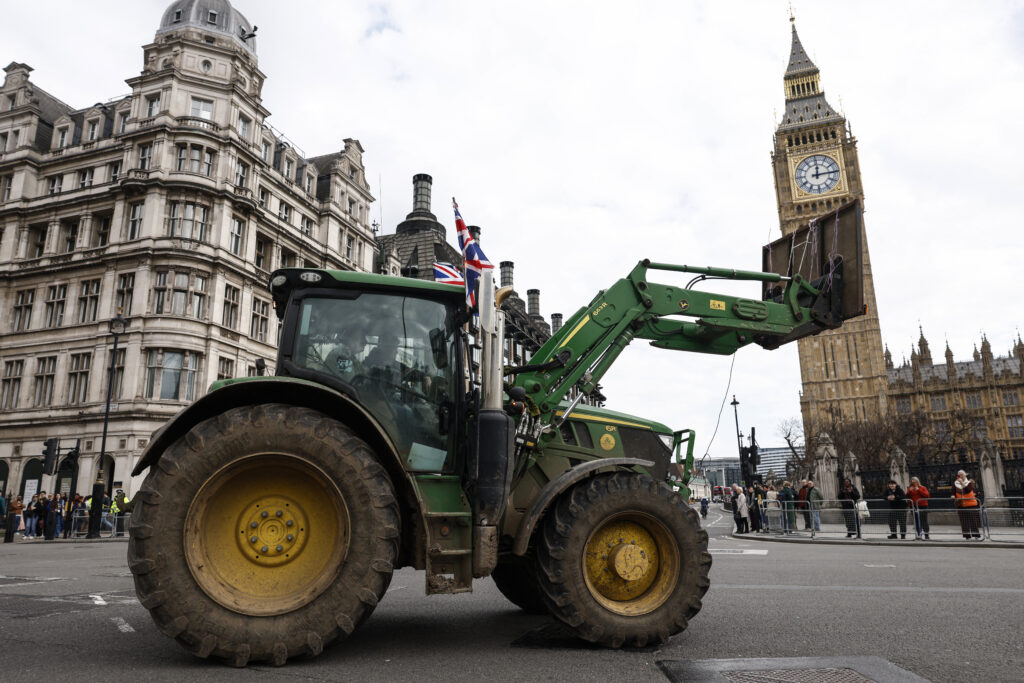
Still bruised by the deal, which came into force in 2023, U.K. farmers and campaigners blame their government for prioritizing speed over safeguards.
“The EU negotiated from strength; the U.K. negotiated to prove a point,” said Liz Webster, founder of Save British Farming. “The contrast between the U.K. and EU Australia deals is striking and tells you a lot about negotiating power post-Brexit.”
Throwing farmers ‘under the bus’
Webster said the EU-Australia deal’s “far more cautious approach” of phasing in smaller volumes over a longer period better protects its domestic sector. Brussels had leverage to do that, representing a market representing hundreds of millions of people. “The U.K. is negotiating as a single mid-sized economy and is more exposed as a result,” she said.
Carina Millstone, executive director of the campaign group Foodrise, also praised the EU’s negotiating approach, which she said aimed to ensure that imports aligned with the bloc’s climate, environment and animal welfare standards.
The U.K. government “could learn from the EU’s trade negotiators to make sure future trade deals better protect the planet and not throw our own farmers under the bus,” she added.
Millstone’s charity, which campaigns for a “fair and resilient food system,” is currently engaged in a legal battle with the government over the Australia deal, which it claims failed to take into account the impact on the U.K.’s international climate targets.
Meanwhile, she said, “meat and dairy from Australia is flooding into the U.K. despite higher emissions intensity and larger deforestation footprint than meat and dairy produced here.”
Widespread beef
Although the meat quotas agreed as part of the EU-Australia deal pale in comparison to those agreed to by the U.K., farmers in the bloc aren’t exactly thrilled, with France’s influential FNSEA farm lobby and the Interbev federation of cattle farmers coming out against the freshly inked deal.
So far, fears of a flood of meat imports entering the U.K. have failed to materialize, with Australia using just 29 percent of its beef quota and 47 percent of its sheepmeat quota in 2025.
But speaking to POLITICO last month, National Farmers’ Union President Tom Bradshaw said farmers were starting to notice an uptick in the volume of beef coming from Australia, three years into the deal.
“So it is infuriating that we didn’t stand firm in that deal — that we sacrificed our food industry as part of the deal,” he said.
A government spokesperson defended the U.K.’s pact with Australia, calling it “a strong partnership between like-minded nations allowing our businesses to trade more freely and creating opportunities for Brits and Aussies alike.”
At the time the deal was struck, the then-Tory government claimed it would unlock £10.4 billion of additional trade, while ending tariffs on all U.K. exports.
Buyer’s remorse
The idea of a free trade agreement with Australia was a good one, Eustice told POLITICO this week, as the EU’s deal was finalized in Canberra. “But there should have been a fixed volume tariff-rate quota on sensitive sectors like beef and lamb.”
Given that “Australia had nothing to offer in return for full liberalization in agriculture,” he said, “a sensible outcome” would have been an eventual quota of around 30,000 to 50,000 tons for beef.
Eustice added that the “one saving grace” of the U.K.-Australia agreement was that it could be terminated and renegotiated with just six months’ notice in writing.
“The current government has the power to act and improve the agreement if they want to.”

Europa Monitor is a seasoned News Editor with over a decade of experience in journalism. Known for his editorial expertise and commitment to accuracy, Europa Monitor leads teams to deliver high-quality news content.