BRUSSELS — The European Commission’s economy chief on Thursday gave his blessing to EU countries seeking to introduce a windfall tax on energy companies that are profiting from skyrocketing fuel prices.
“There is nothing preventing member states from applying this,” Economy Commissioner Valdis Dombrovskis told MEPs during a hearing at the European Parliament in Brussels. “We are looking into whether we can come up with some kind of more coordinated approach at the European level. It’s currently being assessed.”
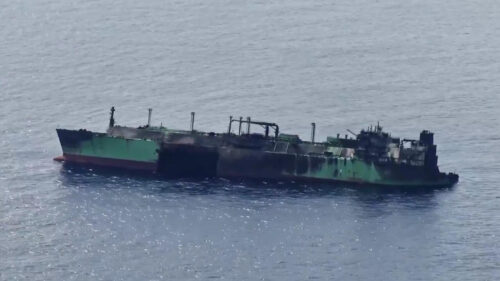
Dombrovskis’ remarks come after Austria, Germany, Italy, Portugal and Spain issued a letter to the Commission, calling on Brussels to ensure that unexpected profits stemming from the Middle East crisis are distributed fairly. EU citizens and businesses are already suffering from spiking fuel prices after Iran effectively closed the Strait of Hormuz, through which cargo ships carry 20 percent of the world’s oil and gas supplies.
This wouldn’t be the first time that EU capitals have raided the profits of energy companies to ease economic pain. The EU introduced a temporary windfall tax in the wake of the Russian full-scale invasion of Ukraine in 2022, which also led to prices soaring.
The Commission is also preparing a package of measures to help countries deal with the crisis. These initiatives will ensure that electricity is taxed less than fossil fuels, and amendments to the EU’s flagship cap-and-trade system to prevent the carbon price from soaring.
Dombrovskis rejected more radical options to address the crisis, such as suspending the EU’s rules for public spending by triggering the so-called general escape clause. Brussels employed the strategy during the pandemic so that governments could spend their way out of the crisis, which plunged Europe into the deepest recession since World War II.
“A condition for activating the general escape clause is to HAVE a severe economic downturn in the euro area or European Union,” the Latvian commissioner said. “We are currently not in this scenario.”
The message will disappoint Italy, whose prime minister, Giorgia Meloni, told the Italian legislature Thursday morning that if the crisis worsens, suspending the EU fiscal rules should not be considered taboo. Dombrovskis said that the Commission will monitor economic developments, which could still deteriorate amid a fragile ceasefire reached between the U.S. and Iran.
The impact of the war on the EU will be front and center of the Commission’s next economic forecast in May. Dombrovskis has repeatedly warned that EU growth could be revised down by up to 0.6 percentage points for this year and next.
“The war in the Middle East has triggered one of the largest supply chain disruptions in the history of the global energy market,” Dombrovskis said.
But EU countries’ public finances are currently under more strain than in previous crises, such as the pandemic and the energy crisis in 2022. Any cuts to energy taxes should be temporary to ensure that revenue isn’t lost to future budgets.
“It’s crucial to keep in mind that our room for maneuver here is more limited than before previous shocks, given […] both higher deficit and debt levels, a higher interest rate environment, and also the urgent need for additional defense spending,” Dombrovskis said.

Europa Monitor is a seasoned News Editor with over a decade of experience in journalism. Known for his editorial expertise and commitment to accuracy, Europa Monitor leads teams to deliver high-quality news content.