BRUSSELS — Brussels is about to show some love to a group of companies it has ignored for years.
Europe has no shortage of promising tech pioneers, but these companies are failing to scale across the EU and keep up with their U.S. and Chinese peers as they grapple with fragmentation across the 27-nation bloc in corporate law, taxation and employment.
Though some startup groups are split on whether it’s likely to work, the European Commission will on Wednesday unveil a sweeping proposal, dubbed EU Inc., to address those problems.
Founders should be able to set up a company in less than two days, for a maximum of €100, fully digitally, according to a draft of the plan obtained by POLITICO. Companies would also be able to roll out an EU-wide employee stock ownership program.
The pitch to turbocharge the process of founding and scaling a company is a rare show of support from Brussels to startup founders after years of neglect. During that time EU policymakers have expended a lot of effort on taming U.S. Big Tech, and regulators have fined Google, Meta and Apple billions of euros.
Those U.S. companies all have a market value in the trillions of dollars, while the highest-valued European tech company, the Dutch ASML, is worth €465 billion.
“Basically, no one cared, and no one paid attention,” said Ann Mettler, board member at EU tech startup fund EIC and former executive at the Bill Gates-backed clean-tech fund Breakthrough Energy, of the struggles of European startups to scale.
Now, with Europe falling further behind the U.S. and China in the tech race, startups are suddenly seen as an asset, and their problems as a political priority.
“It comes awfully late and the question is: Is it enough?” Mettler said.
Turning point
Europeans have no less appetite to start a tech company than their U.S. or Chinese counterparts. Europe hosts 35,000 early-stage startups, more than any other global region, the Commission said last year. But founders run into trouble when they want to serve a bigger market, raise more capital, or poach the best talent.
Then they face 27 regimes for setting up shop, 27 capital markets and 27 ways of employing and rewarding talent. Going elsewhere is often the easier option.
Over the past decade, more than €700 billion in tech market value has left Europe, as European companies were acquired by non-European ones or chose to list elsewhere, according to research from McKinsey and Swedish investment group EQT shared exclusively with POLITICO.
European startup founders’ demands to Brussels have been consistent: Eliminate the barriers.
“For years now, France Digitale has been calling for better market access, financing and talent pipelines for European startups,” said Maya Noël, CEO of France Digitale, a French startup lobby. “What has changed is that now Brussels is finally listening.”
Earlier efforts focused on aligning the policies of EU countries on topics such as how to issue visas for tech talent or reward them with stock options. It relied on country-led initiatives, such as the Europe Startups Nations Alliance, which never gained mainstream attention.
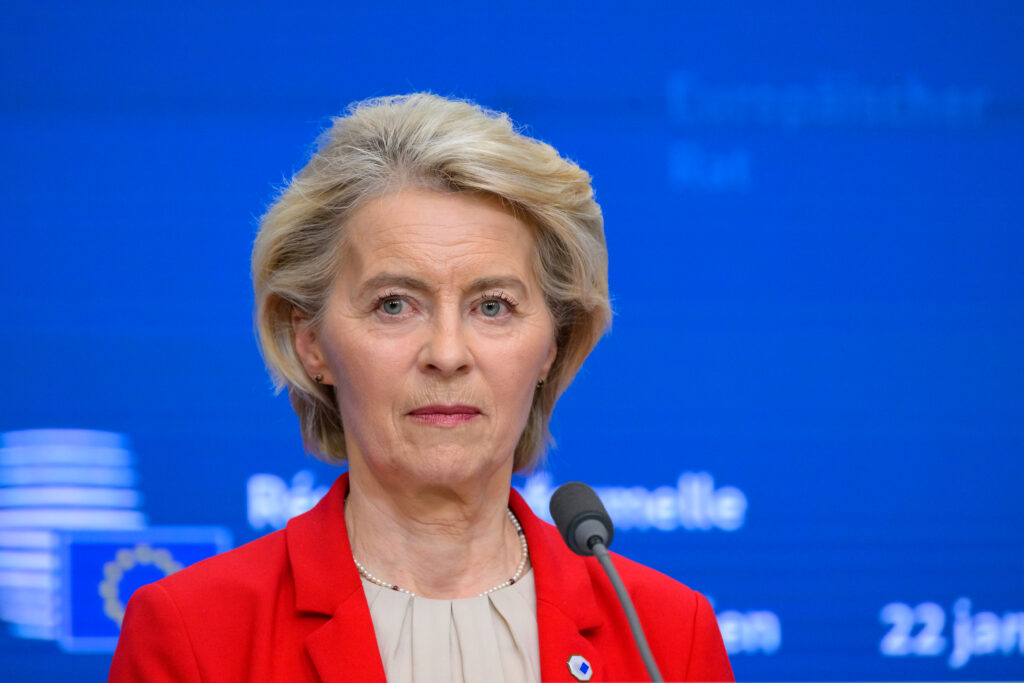
The election of Ursula von der Leyen for a second term as Commission president saw a change in tone.
She promised a new EU-wide legal status to help innovative companies grow — covering incorporation, hiring, taxation and insolvency — and installed the bloc’s first-ever startup commissioner, the Bulgarian Ekaterina Zaharieva.
Irish payment billionaire John Collison, founder of Europe’s rare tech success Stripe, praised the move. Policymakers in Brussels “are really focusing on the right issues,” Collison told POLITICO in an interview last April.
Yet startup lobbies still doubt that the proposal landing on Wednesday will get it right.
After initial worries that the proposal’s legal basis could lead to the regime being fragmented across 27 national systems, they now worry that the EU Inc. proposal will lack both an EU-wide business register and an EU court to settle disputes.
“What founders and investors need is a truly European system: a common EU registry, common dispute resolution, digital insolvency procedures suited to startups, and employee stock options taxed at exit,” said Serena Borbotti-Frison, director-general of startup lobby Allied For Startups.
Late-stage funding
The draft plan obtained by POLITICO fulfils many of the long-standing demands of startups: fast and cheap incorporation, a fully digital and “once only” data exchange with authorities, and the option to roll out an EU-wide stock option plan.
Once Wednesday’s proposal is released, it’s just the beginning.
European startups struggle to secure sufficient late-stage funding in the EU to scale their businesses, often driving them to U.S. investors and paving the way for them to relocate across the Atlantic altogether.

That exodus has put the spotlight on the perennial ambition to create a more integrated European financial market that could pool capital for higher-risk investments.
“A fundamental precondition for sustainable growth is a true savings and investments union, with a fully integrated and efficient capital market that effectively channels savings into productive investments,” EU leaders will say at their summit on Thursday, according to draft conclusions obtained by POLITICO.
The European Commission is also working on an Innovation Act, under which it will urge governments to procure more from startups, according to a slide outlining the law’s architecture, seen by POLITICO.
But the Commission’s quality watchdog has rejected the law, according to two officials. It is now delayed.
Startup lobby groups are keen to keep the pressure on policymakers who are not always steeped in the realities of building companies.
“A lot of European policymaking is basically done by people who know nothing about business, about selling anything, [or] the need for markets and demand,” Mettler said.

Europa Monitor is a seasoned News Editor with over a decade of experience in journalism. Known for his editorial expertise and commitment to accuracy, Europa Monitor leads teams to deliver high-quality news content.