BARCELONA — Huawei is blacklisted in several European capitals over cybersecurity and alleged bribery concerns, but Europe’s biggest tech industry shindig this week rolled out the red carpet for the Chinese telecommunications giant.
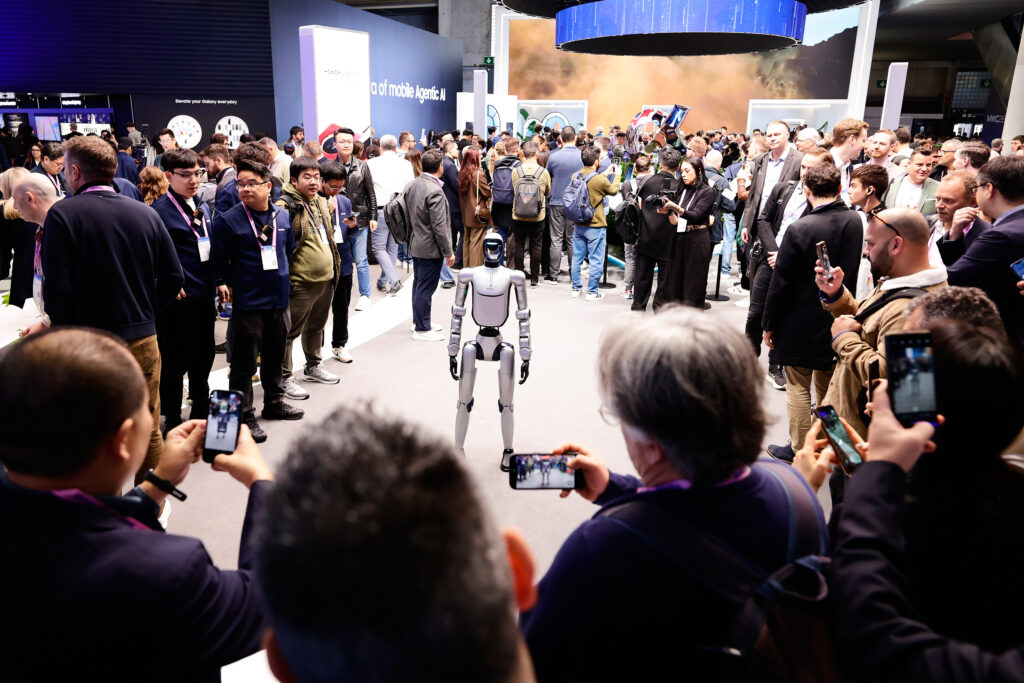
As tech executives and political leaders attending Mobile World Congress navigated the Barcelona convention center, they did so under a notable Huawei presence. The company was the event’s largest exhibitor, hosting the biggest booth at the entrance of the exhibition hall and bagging prime-time speaking slots with top executives making the trip to Europe.
After the EU moved in recent weeks to force governments to ditch telecom kits from untrusted vendors and last year blacklisted Huawei lobbyists in Brussels over bribery allegations, several attendees called out the prominence. (Huawei said at the time it “has a zero tolerance policy towards corruption or other wrongdoing.”)
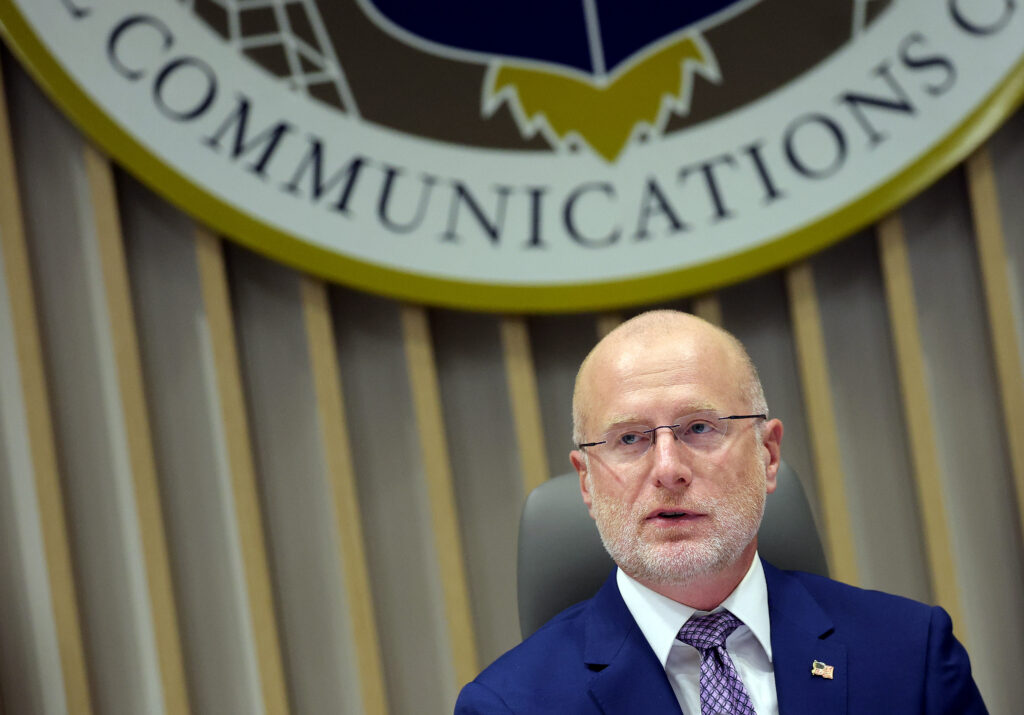
“I understand [Huawei] has a big presence. I think it is concerning,” Brendan Carr, the head of the United States’ communications regulator, told POLITICO.
Huawei’s dominance at the annual Mobile World Congress once again illustrates the challenge facing Brussels as it pushes to outlaw the Chinese supplier from European networks.
While the U.S. administration has been aggressive in its stance to exclude Huawei from networks, European governments are split — especially given a new desire to be less dependent on American technology. Huawei retains a meaningful footprint and support from several capitals, including the event’s host country of Spain, where a third of the network runs on Chinese hardware.
“You cannot restrict Huawei from your critical infrastructure on a Monday and celebrate their sponsorship on a Thursday,” said Mika Aaltola, a center-right member of the European Parliament from Finland, who is a member of the Beijing-critical cross-party parliamentary group, IPAC — arguing that EU officials “should be mindful of the optics” given the company’s “formal high-risk designation” in several countries.
Mobile World Congress is organized by the global mobile association GSMA, of which Huawei is a member. A spokesperson said the event is “the only place where you’ll find everyone from CEOs and founders to presidents and other heads of state, all under one roof. This creates a unique environment where deals get done.”
GSMA declined to comment on the details of Huawei’s sponsorship of the event, citing “commercial sensitivities,” but said, “Huawei is not engaged in any GSMA activities … involving EU institutions.”
Huawei didn’t respond to multiple requests for comment. In response to a request to visit the central part of their booth, a Huawei spokesperson said it was not open to the media, a change in approach from previous years when POLITICO was able to access it.
MWC is a “universal industry forum” which “reflects the global telecommunications ecosystem as it currently exists in reality,” said Markéta Gregorová, a Greens lawmaker in the European Parliament who will lead negotiations on the EU’s effort to make its networks more secure.
Yet lawmakers from Brussels visiting as part of the European Internet Forum delegation — which suspended Huawei as a member in 2025 — said that they would not tour Huawei’s exhibition booth this week, in contrast to previous years.
For Aaltola, “Huawei’s prominence at MWC is not a neutral industry fact, it is a choice with geopolitical consequences,” adding that the “question is not whether to engage with the tech industry, but whether we are sending coherent signals about our own security assessments.”
Too powerful to ignore
Longtime participants in the annual gathering said Huawei’s prominence over the years reflects a strategic effort to show resilience to political pressure, amid the company’s enduring commercial clout.
“There’s still a lot of revenue to be made in Europe,” said telecom consultant John Strand, adding that Huawei’s presence at MWC is to “keep the narrative they have tried to sell the world” that they are just “an innocent victim of a trade war between China and the U.S.”
According to data from London-based research firm Omdia, Huawei thrived globally last year despite pressure in both the U.S. and Europe. The Chinese tech giant ranked first in revenues for both the base stations and antennas it sells, ahead of European champions Ericsson and Nokia.
That’s despite concerns that the gear it sells could enable espionage, data interception or state influence by the Chinese government due to China’s national security laws.
When the EU executive proposed in January to force the phase-out of Huawei equipment from critical telecom networks in a revised EU law, the plan was immediately slammed by Beijing. A Huawei spokesperson previously said in a statement that laws to block suppliers based on their country of origin violate the EU’s “basic legal principles of fairness, non-discrimination, and proportionality,” as well as its World Trade Organization obligations. The company “reserve[s] all rights to safeguard our legitimate interests,” the spokesperson said.
A senior tech industry representative, who was granted anonymity to discuss the matter of Huawei’s presence at the event, said: “Exactly because they are being pushed the way they are, they need to be able to produce an alternative experience saying: ‘We are still here, we are as great as ever … We are not bending over’.”
For some, Huawei’s global clout is precisely why engagement should remain open, even if that comes with guardrails. “Maintaining open channels of observation and dialogue with the entire sector is vital,” said Gregorová, the Greens lawmaker.
She described the presence of EU officials at global events like MWC “as an act of active observation and necessary industry engagement, rather than an endorsement.”
That was echoed by the European Commission’s top technology official, Henna Virkkunen. “I am participating in different global and international events with many different stakeholders involved, always,” she said in an interview on the sidelines, while emphasizing the EU’s effort to crack down on foreign dependencies and mitigate risks.
Liberal lawmaker Michał Kobosko, who was also part of the Brussels delegation, said he didn’t meet with Chinese officials or businesses this week. “I believe that was the right thing to do,” he said, citing the risks associated with Chinese tech suppliers.
“We have to be careful,” he said, while stressing that in the digital arena China remains “an important player.”
Out of options
The choices facing governments are acutely apparent in the event’s host country, where about a third of Spain’s networks rely on Chinese vendors like Huawei, according to the latest data from Strand Consult.
That makes it a key stronghold for the company in Europe. When it comes to technology, “Spain is a country which is on Chinese cocaine,” Strand said — citing the example of a recent multimillion-euro contract with Huawei awarded by Madrid for the storage of judicial wiretaps.
That drew criticism from Brussels and Washington. Spain’s interior ministry said in a statement that the government had awarded the contract to “European companies,” which then purchased storage products from Huawei. “There is no risk to security, technological and legal sovereignty, nor is there any foreign interference or threat to the custody of evidence,” the ministry said.
Juan Ignacio Zoido Álvarez, a member of Spain’s center-right opposition party, last week said the decision puts “the entirety of the EU at risk.”
Spain’s legacy operator, Telefónica, reportedly renewed its partnership with Huawei in 2024 to manage its most sensitive core 5G customer networks until 2030. Telefónica declined to comment.
With Prime Minister Pedro Sánchez set to visit China in April for the fourth time in three years, Sánchez’s recent spat with U.S. President Donald Trump over the bombing of Iran may further embolden decisions in favor of Huawei.
“From a political and geopolitical perspective, it’s very clear that the Spanish government is operating in a largely anti-American mindset, very focused on maintaining a balance with the Chinese — and that includes telecom vendors,” a second senior telecom industry executive said.

Europa Monitor is a seasoned News Editor with over a decade of experience in journalism. Known for his editorial expertise and commitment to accuracy, Europa Monitor leads teams to deliver high-quality news content.