Copernicus Sentinel-1D and Sentinel-5A provide first images, marking important advances in earth and atmospheric monitoring
Copernicus Sentinel-1D and Sentinel-5A provide first images, marking important advances in earth and atmospheric monitoring ldhoop Wed, 26/11/2025 – 15:51 Following their successful launches in 2025, two new Copernicus satellite missions, Sentinel-1D and Sentinel-5A, have returned their first images, representing important progress in the EU’s capacity to monitor the planet’s surface and atmosphere. Sentinel-1D, launched on 4 November 2025, acquired its first radar images only days later on 7 November. One of these initial observations shows northern Germany in false colour, displaying variations in land cover across the region. Cultivated fields, water bodies, and urban areas, including Bremen, Bremerhaven, Oldenburg, and Meldorf, are clearly distinguishable. The Elbe and Weser rivers appear in deep blue as they flow into the North Sea, alongside the patterns of the Wadden Sea. Sentinel-5A, launched on 13 August 2025, began delivering its first atmospheric measurements two months later, on 13 October. One of these initial data products shows atmospheric concentrations of formaldehyde (HCHO) and ozone (O₃), providing an overview of key pollutants and essential climate variables. The formaldehyde map displays elevated values along Angola’s north-western coast, primarily linked to wildfire emissions, while higher concentrations over the Central African Republic result from a combination of fire activity and natural biogenic sources. The companion global ozone map shows the seasonal depletion of stratospheric ozone over Antarctica, with column density values below 220 Dobson Units. Together, Sentinel-1D and Sentinel-5A significantly widen the EU’s observational capacity. Sentinel-1D supports land and marine monitoring, emergency response, and security applications, while Sentinel-5A strengthens atmospheric analysis essential for climate policy, air-quality management, and public-health protection. Data from both missions will be integrated into Copernicus Services to provide timely, high-quality information for users worldwide. Read more about the Sentinel-1 and Sentinel-5 missions. Want to receive the Copernicus image of the day daily in your inbox? Subscribe here Wed, 26/11/2025 – 12:00
Following their successful launches in 2025, two new Copernicus satellite missions, Sentinel-1D and Sentinel-5A, have returned their first images, representing important progress in the EU’s capacity to monitor the planet’s surface and atmosphere.
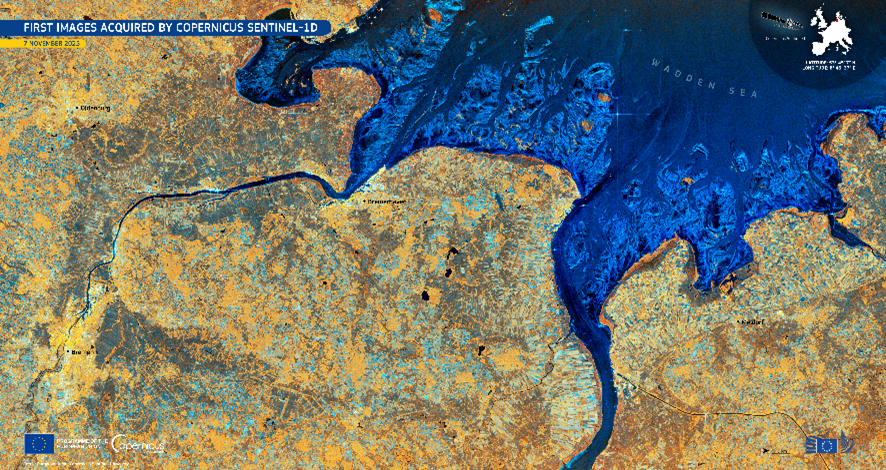
Sentinel-1D, launched on 4 November 2025, acquired its first radar images only days later on 7 November. One of these initial observations shows northern Germany in false colour, displaying variations in land cover across the region. Cultivated fields, water bodies, and urban areas, including Bremen, Bremerhaven, Oldenburg, and Meldorf, are clearly distinguishable. The Elbe and Weser rivers appear in deep blue as they flow into the North Sea, alongside the patterns of the Wadden Sea.
Subscribe to our free weekly newsletter!
A week of European news in your in-box. We find the news you need to know, so you don't have to.
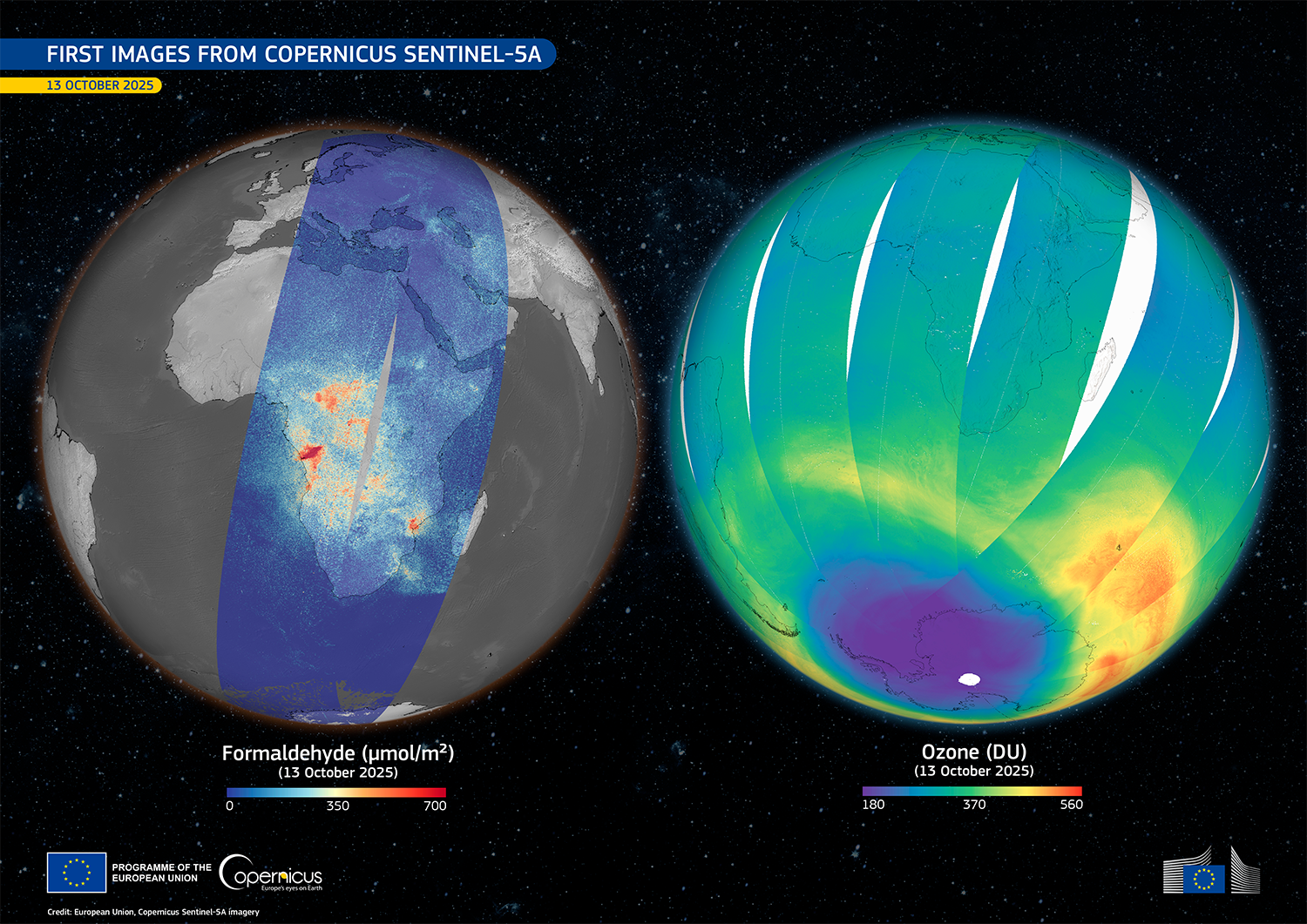
Sentinel-5A, launched on 13 August 2025, began delivering its first atmospheric measurements two months later, on 13 October. One of these initial data products shows atmospheric concentrations of formaldehyde (HCHO) and ozone (O₃), providing an overview of key pollutants and essential climate variables. The formaldehyde map displays elevated values along Angola’s north-western coast, primarily linked to wildfire emissions, while higher concentrations over the Central African Republic result from a combination of fire activity and natural biogenic sources. The companion global ozone map shows the seasonal depletion of stratospheric ozone over Antarctica, with column density values below 220 Dobson Units.
Together, Sentinel-1D and Sentinel-5A significantly widen the EU’s observational capacity. Sentinel-1D supports land and marine monitoring, emergency response, and security applications, while Sentinel-5A strengthens atmospheric analysis essential for climate policy, air-quality management, and public-health protection. Data from both missions will be integrated into Copernicus Services to provide timely, high-quality information for users worldwide.
Read more about the Sentinel-1 and Sentinel-5 missions.
Want to receive the Copernicus image of the day daily in your inbox?
Europa Monitor is a seasoned News Editor with over a decade of experience in journalism. Known for his editorial expertise and commitment to accuracy, Europa Monitor leads teams to deliver high-quality news content.