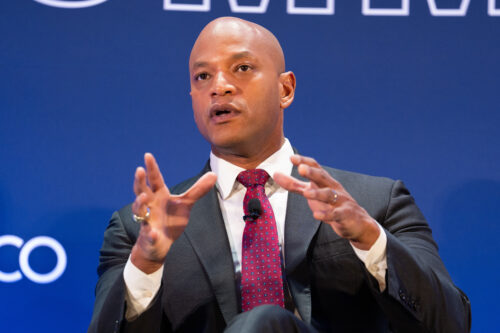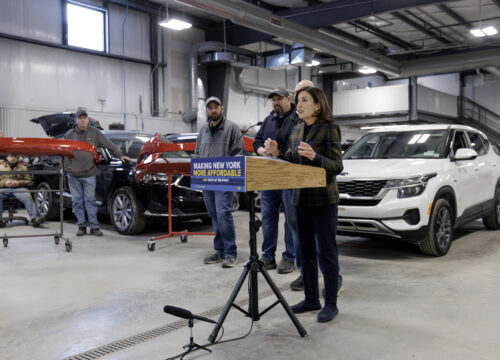
Like many frequent travellers between the UK and the EU, I not infrequently find myself in conversations about how the everyday relationship between the UK and the EU has changed since Brexit. The introduction of the European Travel Information and Authorization System — ETIAS — is a telling example, writes Roger Casale (pictured, below).
As New Europeans we work closely with civil society organiations and policymakers on both sides of the Channel to keep people-to-people ties alive, and questions about mobility come up again and again.
On paper, ETIAS is a fairly simple administrative measure. A short online application, a modest fee, a travel authorisation valid for several years. Nothing dramatic. Similar systems already exist elsewhere in the world.
But politics is not only about what measures do. It is also about what they mean.
For British travellers, ETIAS is a reminder that we are now visitors to a European space that many of us once moved through freely — something the people I speak to in Brussels rarely need reminding of. For young people in particular, it reinforces the sense that something important has been lost.
Before Brexit, mobility between the UK and the rest of Europe was almost taken for granted. Students studied abroad through Erasmus. Young professionals spent a year working in another country. Musicians, artists, researchers and volunteers crossed borders with little more than curiosity and a passport.
I therefore welcome the UK government’s decision to seek to rejoin the Erasmus+ programme. It will reopen an important channel for educational exchange. But Erasmus alone will not restore the broader ecosystem of youth mobility that once existed between the UK and the EU.
Today the landscape looks very different. Opportunities still exist, but they are more complicated, more bureaucratic and often more expensive.
A Danish EU citizen living in the UK recently described to us how these changes are playing out in practice. Travelling from Denmark back to Britain, she discovered that airline check-in systems did not easily accommodate her dual nationality. Having booked a return ticket using her Danish passport, she could not simply switch to her British passport on the return leg because the airline’s system expected an Electronic Travel Authorisation. The result was confusion at check-in and the realisation that the system had not anticipated the everyday reality of dual nationals and residents whose lives span both sides of the Channel.
Experiences like this are becoming increasingly common. They illustrate how even relatively small administrative changes can create unexpected obstacles for people whose lives span both the UK and the EU.
These questions were also discussed at an event organised by New Europeans at Europe House in London last May, in collaboration with the European Parliament Liaison Office in the UK. Participants from civil society, youth organisations and policy circles shared similar stories about the practical challenges people now face when travelling, studying or working across borders. As one attendee later reflected, it was “one of the most memorable highlights of the year,” not least because it brought together people determined to rebuild opportunities for mobility between the UK and Europe.
This matters not only for young people in Britain, but also for young Europeans. For decades, the UK was one of the most popular destinations for students, trainees and young professionals from across the EU. Universities, research institutes, cultural organisations and businesses built strong networks that benefited both sides.
In other words, youth mobility was never a one-way street between the UK and the EU. It was part of the fabric of European cooperation. And for many young Europeans, Britain was an important thread in that fabric.
That is why the current discussion about a UK–EU Youth Experience Scheme matters so much. At the EU–UK Summit in May 2025, both sides agreed to explore such a scheme, which could allow young people to live, work, study or volunteer in each other’s countries for a limited period of time.
New Europeans has been working closely with Maurizio Cuttin, Spokesman for the British Youth Council and UK Young Ambassador to the European Youth Forum, to push this conversation forward. Together we asked for the issue to be discussed at the most recent meeting of the EU–UK Parliamentary Partnership Assembly, the body created after Brexit to oversee the implementation of the Withdrawal Agreement and the Trade and Cooperation Agreement.
A discussion calling for an ambitious and inclusive Youth Experience Scheme was subsequently tabled. The proposal emphasises something that is often forgotten in political debates: mobility should not be a privilege reserved for the few. If such a scheme is created, it must be accessible to young people from all backgrounds.
This conversation is not only happening in the UK. Across Europe there is growing interest in rebuilding the connections that Brexit disrupted. Youth organisations, universities and civil society groups increasingly see mobility not as a relic of the past, but as an investment in Europe’s future.
ETIAS, in that sense, is a paradox. It is designed to manage borders more efficiently. Yet at the same time it reminds us how important it is to create new opportunities for people — especially young people — to cross those borders.
If the UK and the EU are serious about renewing their partnership, youth mobility would be a good place to start.
Roger Casale is founder and CEO of New Europeans, a civil society organization working to strengthen citizens’ rights and people-to-people ties across Europe.

Europa Monitor is a seasoned News Editor with over a decade of experience in journalism. Known for his editorial expertise and commitment to accuracy, Europa Monitor leads teams to deliver high-quality news content.