BRUSSELS — The European Union says it’s determined to crack down on election disinformation. Hungary is testing just how far it’s willing to go.
Ahead of the country’s election next month, deepfake videos and other misleading content targeting opposition leader Péter Magyar are spreading widely online, much of it amplifying narratives pushed by Prime Minister Viktor Orbán’s allies.
For Brussels, the surge poses an awkward problem: The EU has pledged to combat election interference but insists it won’t intervene in national votes.
That leaves officials in a bind. Stepping in risks handing Orbán ammunition for his long-running claim that Brussels is meddling in Hungarian democracy. Doing nothing could undermine the EU’s push to police online manipulation under new digital rules.
When it comes to “foreign information manipulation, interference and disinformation, of course the origin can come from anywhere. It can come from within the European Union,” European Democracy and Justice Commissioner Michael McGrath told a press conference when asked if the EU can do anything about AI-generated misinformation in Hungary.
It’s important to respond to interference attempts “from wherever they come,” he said.
Yet the “Commission does not intervene in the conduct of national elections,” he later told POLITICO. Brussels is still reeling from the fallout of the decision to cancel Romania’s 2024 vote over alleged Russian-backed information interference on TikTok, which buoyed anti-Brussels populists.
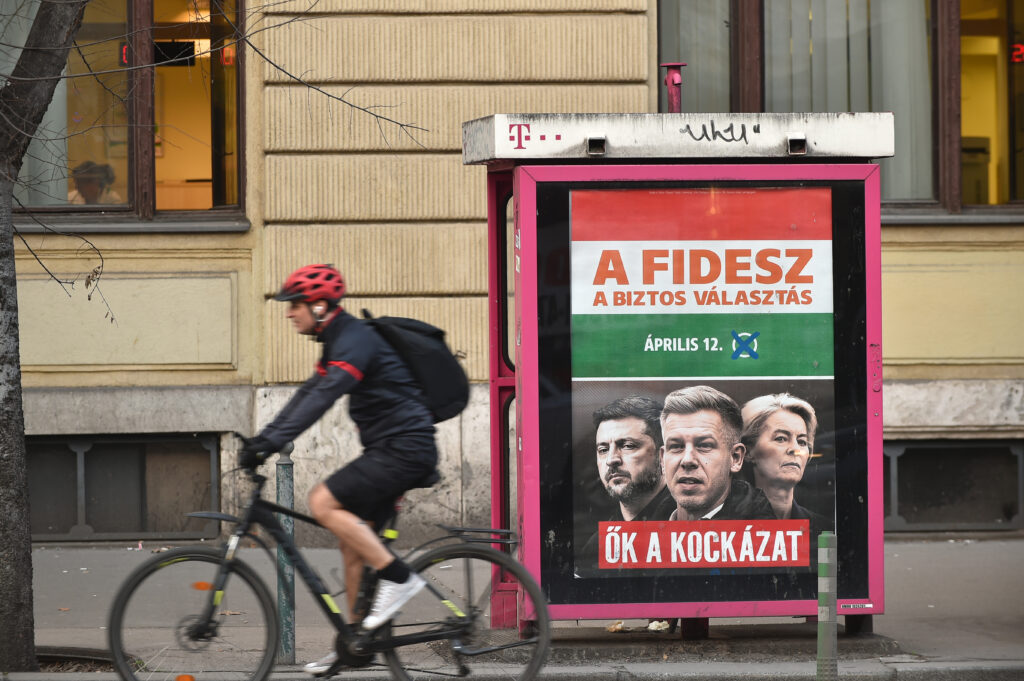
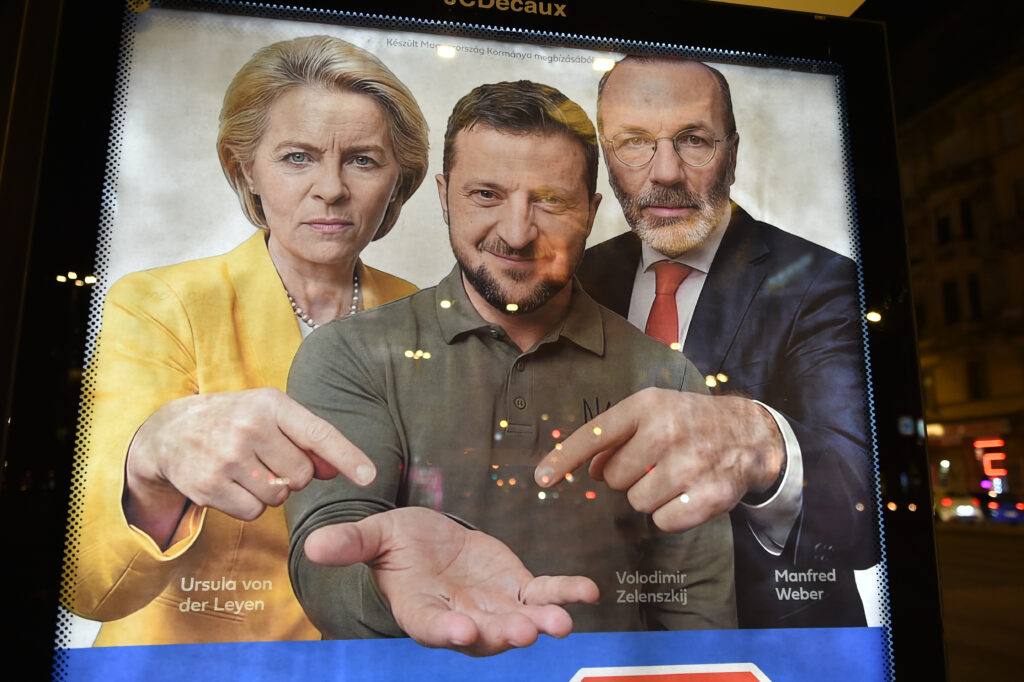
The sensitivities over the Hungarian election come as much of the content circulating online pushes a narrative that Magyar is in cahoots with the Brussels elite to drag Hungary into war.
One deepfake video shows Commission President Ursula von der Leyen and the opposition leader driving down a tree-lined highway. Magyar, holding the wheel, turns to von der Leyen as they reach an intersection: left for Brussels or straight for Hungary.
“Don’t worry Ursula, I always choose the left side,” the fake Magyar says, grinning at the camera as the car heads toward signs for war and taxes.
Magyar said Tuesday more organized campaigns to discredit him are coming.
‘New shiny tool’
Since Hungary’s election campaign kicked off this year, disinformation has been ripe and AI labeling has not been consistently enforced, said Botond Feledy, a non-resident fellow at the Centre for Euro-Atlantic Integration and Democracy, a Budapest-based think tank.
“EU actors even at the political level hardly picked a fight with Orban on domestic disinformation, not to mention any official measures,” Feledy said.
Szilárd Teczár, the editor-in-chief of fact-checking organization Lakmusz, said a group called the National Resistance Movement has “repeatedly published AI-generated videos targeting the opposition Tisza Party and its leader Péter Magyar.” The movement’s owner is the pro-government influencer network Megafon.
Teczár said the overarching narrative is that if the government loses the election, Brussels and Magyar’s Tisza party would “prioritize the needs of Ukraine, take money away from Hungarians,” and drag the country into the war with Russia.
Deepfake videos reviewed by POLITICO had anything from a few thousand to millions of views.
Organizations like Lakmusz also say Fidesz allies are using advertising to boost their messages. Major platforms like Meta disallow political ads but some slip through the restrictions, the groups say.
“It is against our policies for advertisers to run ads about social issues, elections and politics in the EU. After investigation, we have removed all the violating ads shared with us,” Meta spokesperson Ben Walters told POLITICO.
As Orbán’s allies portray Magyar as a stooge of Brussels, they are also taking aim at anti-misinformation efforts from the bloc. The EU recently unveiled its European Democracy Shield, an initiative it says will combat election misinformation and interference.
Fidesz MEP András László tilted at the EU’s Democracy Shield at a conference hosted by the Danube Institute in February, claiming it is the Commission’s “new shiny tool” to “control political narratives.”
While the initiative is going to fund traditional media, he said, “they are going to fund a censorship effort through the Democracy Shield as well.”
Policing the police
The Commission’s enforcement of its rules around misinformation online rely largely on national authorities.
Feledy says Hungary’s National Media and Infocommunications Authority, which is tasked with monitoring online platforms under EU law, is not independent. The authority says the Commission is ultimately responsible for enforcing online rules on big platforms.
Asked about the authority’s independence, a spokesperson told POLITICO it is an “independent regulatory body and is subordinated only to the law.”
The authority has asked the Commission to host a roundtable on safeguarding the elections ahead of the vote, the spokesperson told POLITICO.
These roundtables are common practice prior to elections, bringing together authorities, online platforms and civil society to cooperate on the upcoming vote. They have been criticized by U.S. Republicans as attempts by Brussels to meddle in national elections.
Ultimately, Hungary’s centralization of power and unwillingness to fight misinformation make it a “super spreader” of narratives that the Kremlin also endorses, said Péter Krekó, a behavioral scientist and disinformation expert.
Those narratives include the idea that the EU is rooting for a war with Russia to benefit its own political and economic interests. “The Russian disinformation machine doesn’t have to spend money on something that the Hungarian government is doing for free,” said Krekó.
Speaking at a panel discussion last week in Budapest, András Rácz, an analyst at the German Council on Foreign Relations, said that in the final weeks of the election campaign he expected to see a considerable uptick in Russian disinformation efforts to try to help swing the vote in Orbán’s favor.
“Orbán’s government has been the best asset Russia has ever had in the EU and NATO,” he said. So far there has not been a concerted effort, but “it would be foolish for them not to do everything they can to keep Orbán in power,” he added.
Jamie Dettmer contributed to this report.

Europa Monitor is a seasoned News Editor with over a decade of experience in journalism. Known for his editorial expertise and commitment to accuracy, Europa Monitor leads teams to deliver high-quality news content.