AMSTERDAM — One of the EU’s top tech enforcers on Monday sought to rally officials and civil society groups facing fire from the United States administration over the bloc’s digital rules, telling them: “Don’t let yourself be scared.”
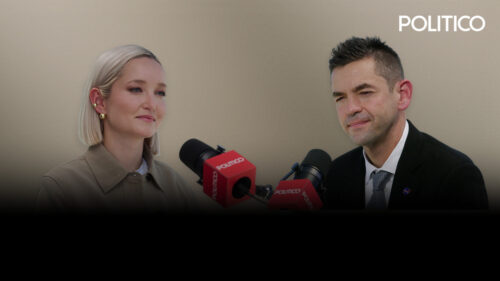
Prabhat Agarwal, the official who heads the European Commission’s enforcement team for the Digital Services Act, made the impassioned speech to a crowd of European regulators, officials and civil society members at a conference at the University of Amsterdam.
The EU law governing online content at the biggest tech companies has been at the center of an escalating fight between the EU and the U.S. over the limits of platform regulation.
The U.S. House Judiciary Committee on Feb. 3 revealed the names and email addresses of numerous people who work on DSA enforcement, right after Washington barred a former top EU official and two members of civil society groups from entering the U.S.
The moves were widely interpreted as an attempt at chilling the implementation of the law.
“Don’t let yourself be scared. We at the Commission stand by the European civil society organizations that have been threatened, and we stand by our teams as well,” Agarwal said.
Enforcement decisions such as the recent €120 million fine on X rely on the work of Commission officials and on evidence produced by civil society groups.
The Commission says the DSA protects users of the biggest technology platforms by seeking to limit abusive and illegal content and election interference — a system that Brussels argues ultimately protects freedom of expression.
The White House, the U.S. committee and other critics of the DSA, including powerful figures like tech mogul Elon Musk, instead argue that the law institutionalizes a regime of censorship that encroaches on free expression.
“Our work” is “more difficult, more adversarial” than anticipated, Agarwal admitted Monday.
Withstanding the pressure from the U.S. is “much bigger than the DSA itself,” he continued. “It has to do with the intellectual space that we [as Europeans] occupy.” He added that Europe must “defend a space in which we can actually debate things that are important for our society.”
Agarwal said that “one sad thing” about the current environment is that the space for open debate has shrunk. DSA workshops have become closed-door events at the request of companies, and fewer people come to Brussels to give talks on related topics.
Agarwal said colleagues have also started sending messages via Signal, an encrypted app, rather than email, and many now have messages set to auto-delete, with the “auto-delete timings getting shorter.”
The Commission’s leadership previously sought to reassure staff whose names and emails were included in the U.S. Congress report, writing in an email seen by POLITICO that the institution stands by officials and will seek to protect them from threats.

Europa Monitor is a seasoned News Editor with over a decade of experience in journalism. Known for his editorial expertise and commitment to accuracy, Europa Monitor leads teams to deliver high-quality news content.