European countries make lots of weapons, but they need the U.S. to coordinate that firepower — something that’s making it difficult to plan for a continental defense effort without Donald Trump’s America.
NATO chief Mark Rutte publicly mocked the idea of Europe defending itself without America, arguing the continent is helpless without U.S. capabilities.
Interviews with diplomats and analysts show why: Europe’s industrial base can build guns, jets, tanks and missiles, but it still leans heavily on the Pentagon for intelligence, logistics, communications and the command-and-control backbone that ties everything together.
Without those capabilities, Europe has little hope of deterring Russia.
“We need to be ready to replace American strategic enablers with our own European ones. This should be our strategic priority,” Defense Commissioner Andrius Kubilius said this week, calling it “a first step towards our independence.”
Detaching from the U.S. will be time-consuming and expensive.
“No European country can, by definition, replace the U.S.” said Olivier Schmitt, head of research at the Institute for Military Operations at the Royal Danish Defence College.
The European Union is aware of those gaps. It adopted a Strategic Compass and a Readiness 2030 plan, aiming to mitigate the risks of U.S. disengagement. But those projects are still a long way off.
What’s really undermining Europe’s bid to rely less on the U.S. is the continent’s own complicated politics, five diplomats and nine analysts told POLITICO.
The European Union’s defense is often hobbled by the need for unanimity, giving a veto to pro-Kremlin Hungary. And even if EU countries do organize in smaller groups, they then have to try to integrate with third nations like Norway, the U.K., and increasingly Canada.
A full divorce would be eye-wateringly expensive; Rutte estimates it would come to 10 percent of GDP, double what NATO countries have committed to spend on defense.
The cost could reach $1 trillion, according to the International Institute for Strategic Studies, a think tank. “Not only would European allies need to replace major U.S. military platforms and manpower … but also address shortfalls in space and all-domain intelligence, surveillance and reconnaissance assets,” as well as replacing U.S. contributions to NATO’s command-and-control arrangements.
However, Europe isn’t starting from zero.
In many areas, the EU already has good alternatives, said Camille Grand, secretary-general of the European Aerospace, Security and Defence Industries Association defense lobby. “I think in 98 percent of the cases, there is a European solution.”
Surveillance
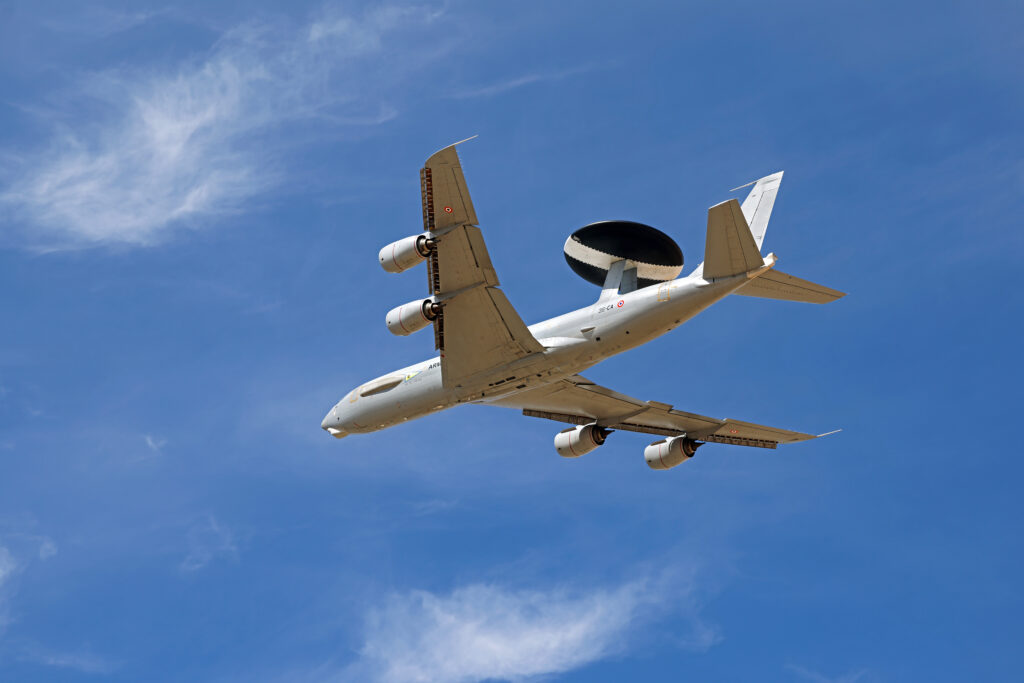
While the Boeing E-3 Sentry, commonly known as AWACS, is a workhorse of surveillance, command, control and communications, NATO is hunting for a replacement.
The initial idea had been to buy Boeing’s U.S.-made E-7A Wedgetail radar aircraft. But a confidential German defense ministry document seen by POLITICO shows Berlin and several NATO partners now want to overturn that 2023 decision and instead switch to a European alternative.
The memo warns that sticking with the Boeing jet would create “significant risks” on price, delivery timelines, maintenance and certification.
Sweden’s Saab GlobalEye provides one alternative. It is being acquired by Sweden and France in December ordered two GlobalEyes to replace its aging E-3F Sentry fleet. German Defense Minister Boris Pistorius said the airplane is in “pole position” to be bought by the Bundeswehr.
Air defense
Raytheon’s MIM-104 Patriot mobile air defense system is used by the U.S. military and 19 European countries, including Ukraine. That makes them reliant on U.S. suppliers; Kyiv has complained about crucial shortages of Pac-3 interceptor missiles that left Patriots idle while Russian missiles rained down on Ukrainian cities this winter.
However, Europe does have alternatives.
The French-Italian SAMP-T has similar capabilities, although it has a much sparser combat record. Ukraine is already operating them and is waiting for a further eight.
Denmark chose the SAMP-T over the Patriot late last year.
Air power
The United States military has over 200 Boeing C-17 Globemaster III in service for strategic airlift, and an even higher number of C-130 Hercules for tactical airlift. They also fly with the Europe’s Heavy Airlift Wing and are operated by many NATO allies.
Europe has its newer Airbus A400M Atlas, with Germany using about 50, the U.K. and France about 20 each, with more on order.
However, airlift capability may be less needed in a defensive war against Russia, where road and rail will be crucial to move troops and materiel. The EU is also working to cut red tape to make it easier to move forces across the continent; the Commission has proposed boosting the military mobility budget tenfold to €17.7 billion in the next budget.
The U.S. has an overwhelming advantage in mid-air refuelling — key in air combat operations. It operates a fleet of about 450 tankers, while Europe has 156, largely the Airbus A330 Multi Role Tanker Transport.
A study by the Center for Strategic and International Studies pointed out at what many EU officials still complain about: that during the 2011 NATO air campaign over Libya, European countries were dependent on the U.S. for many capabilities.
Space
Europe’s military space capabilities are limited, with many nations relying on the U.S. to provide intelligence and navigation. European countries have announced plans to ramp up spending on space, but it will take years.
Europe does have the new Ariane 6 rocket, but it has only been used six times, putting it far behind U.S. launch capability.
“Europe still has a lot of catching up to do. It will take time and a long-term commitment to spend more on space, and defense generally. There seems to be a will right now, so maybe there is a way,” said Clayton Swope, a senior fellow at CSIS.
The EU is financing the IRIS² orbital communications system that is supposed to rival Elon Musk’s Starlink, although it is expected to go into service only by 2030 after delays and cost overruns.
“Think of how many Starlink, Amazon LEO, Guowang, and Qianfang satellites will have been launched by then,” said Victoria Samson, chief director of space security and stability at the Secure World Foundation, an NGO.
Intelligence
“The most difficult enabler to replace will be the intelligence and targeting capabilities that the United States provides,” said Max Bergmann, director of the Europe, Russia and Eurasia program at CSIS. “This is not just about the physical assets — satellites, high-end drones — but also the fusion of the intelligence gained from these assets into clear identifiable targets.”
Although new U.S. military aid to Ukraine has shrivelled to almost nothing under Trump, Kyiv remains reliant on U.S. intelligence. Real-time satellite imagery has been key to Ukraine’s defense against Moscow, giving its military the ability to anticipate incoming Russian attacks and target their own strikes.
After Trump briefly paused intelligence sharing last year, Kyiv and its European allies are scrambling for alternatives.
Ukraine has access to data from Finnish space company ICEYE’s satellites, which are also used by countries like Poland, the Netherlands, Portugal and Finland.
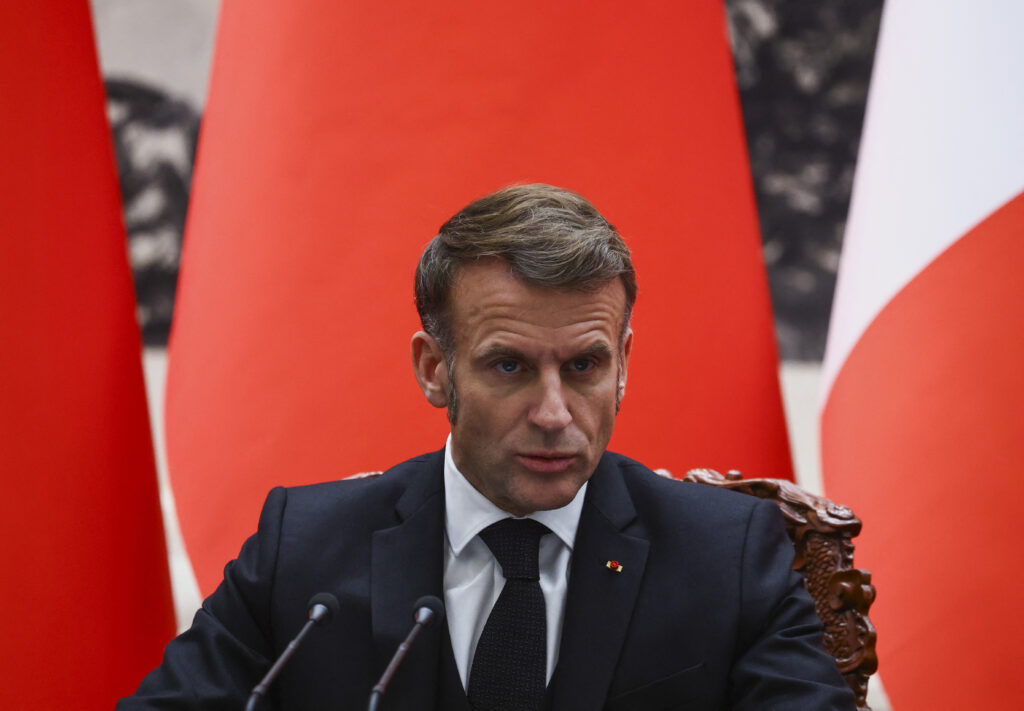
French President Emmanuel Macron has said France is now supplying roughly two-thirds of Ukraine’s intelligence support.
Political limits
Those capability gaps were less of a problem when the U.S. was seen as a solid NATO ally. Now there are growing doubts.
New results from The POLITICO Poll noted sharp drops in France, Germany and the U.K. when asked about the U.S. as a reliable security partner.
But for European countries to step up, they’ll have to unify their defense markets, cut out duplication of weapons systems, jointly buy arms, and invest much more in defense.
“Europe’s problem is not that it lacks money. It is that it lacks coherence,” writes Tom Tugenhadt, a former British security minister.
Chris Lunday reported from Berlin and Audrey Decker from Washington.

Europa Monitor is a seasoned News Editor with over a decade of experience in journalism. Known for his editorial expertise and commitment to accuracy, Europa Monitor leads teams to deliver high-quality news content.