BRUSSELS — European airports face a looming shortage of jet fuel as the ripple effect of Iran’s closure of the Strait of Hormuz to most oil shipments hits the continent.
London Heathrow and other U.K. airports are the most vulnerable, with fuel-caused flight cancellations already underway. Regional airline Skybus has ended one route due to fuel prices.
French airports could be next, according to estimates by energy analysis firm Kpler.
“France has the next-biggest deficit between supply and demand in our estimations after the U.K.,” said George Shaw, senior oil analyst at Kpler, while noting that France is in a good position to source extra fuel from non-Gulf sources.
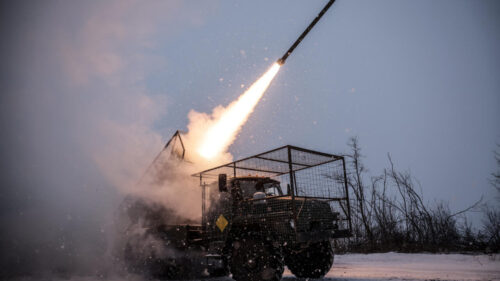
The war unleashed on Iran by the U.S. and Israel has prompted Tehran to close the Strait of Hormuz to most shipping, disrupting global energy markets. About a fifth of the world’s crude supplies until recently passed through the waterway.
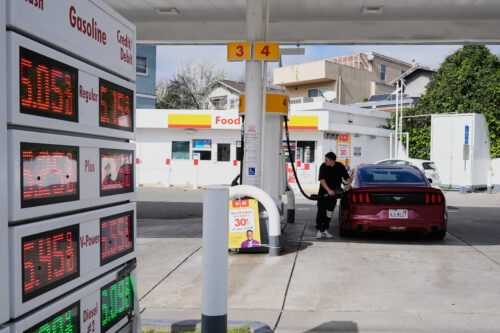
European jet fuel prices hit a record $1,900 per metric ton on Thursday, according to specialized publication Argus.
So far the continent’s airports have enough fuel to keep airplanes flying, but Argus warned of potential shortfalls.
Portugal could run out of jet fuel in four months, the publication projected, while Hungary could be out in five, Denmark in six, Italy and Germany in seven, and France and Ireland in eight. Poland is almost self-sufficient in jet fuel, so is unlikely to face a crisis.
“The current situation in the Middle East and uncertainty around how long it will last is indeed raising concerns around the availability of jet fuel in Europe over the next few weeks and months,” said Ourania Georgoutsakou, managing director of the Airlines for Europe lobby.
Even before the war in the Middle East, airlines had signaled the bloc was facing a structural kerosene deficit, due in part to sanctions on Russian oil and declining European refining capacity. European jet fuel production relies on crude imports, mainly from the Middle East.
“Europe has long been a net importer of jet fuel, with imports accounting for roughly 30 percent of regional demand,” the International Air Transport Association (IATA) airline lobby warned last year.
“This growing reliance on imports, combined with uneven infrastructure development, underscores the risk of localized shortages and price volatility, particularly if geopolitical shocks or sanctions constrain global jet fuel availability further,” the IATA wrote in its 2025 analysis, which now sounds prescient.
While identifying France as the second-most exposed country in Europe to a potential jet fuel crunch, Kpler’s Shaw said he believes Paris will have less trouble than London in getting missing volumes of kerosene even if supplies from the Gulf remain blocked.
“It can get overland volumes from the Netherlands or Belgium,” which serve as “the oil hubs of Europe” given they are the main entry point for seaborne crude, he said.
Despite the looming fuel crunch, airlines are having a difficult time saving fuel. Since the beginning of the war in Iran, carriers have been forced to fly longer routes to avoid the Gulf, thereby burning more kerosene.
According to European air traffic organization Eurocontrol, “1,150 flights are likely to continue to be impacted by reroutings every day during the summer as long as the conflict lasts in its current form.”
A quick end to the war seems unlikely after U.S. President Donald Trump on Thursday warned Iran: “We are going to hit them extremely hard over the next two to three weeks, we’re going to bring them back to the stone ages, where they belong.”
That leaves airports and airlines increasingly worried about their access to fuel.
“The longer hostilities continue, the greater the impact on demand, in terms of increasing fuel prices, potentially growing fuel shortages in many parts of the world, which could also impact volumes of flights as well as flight prices,” Eurocontrol said.

Europa Monitor is a seasoned News Editor with over a decade of experience in journalism. Known for his editorial expertise and commitment to accuracy, Europa Monitor leads teams to deliver high-quality news content.