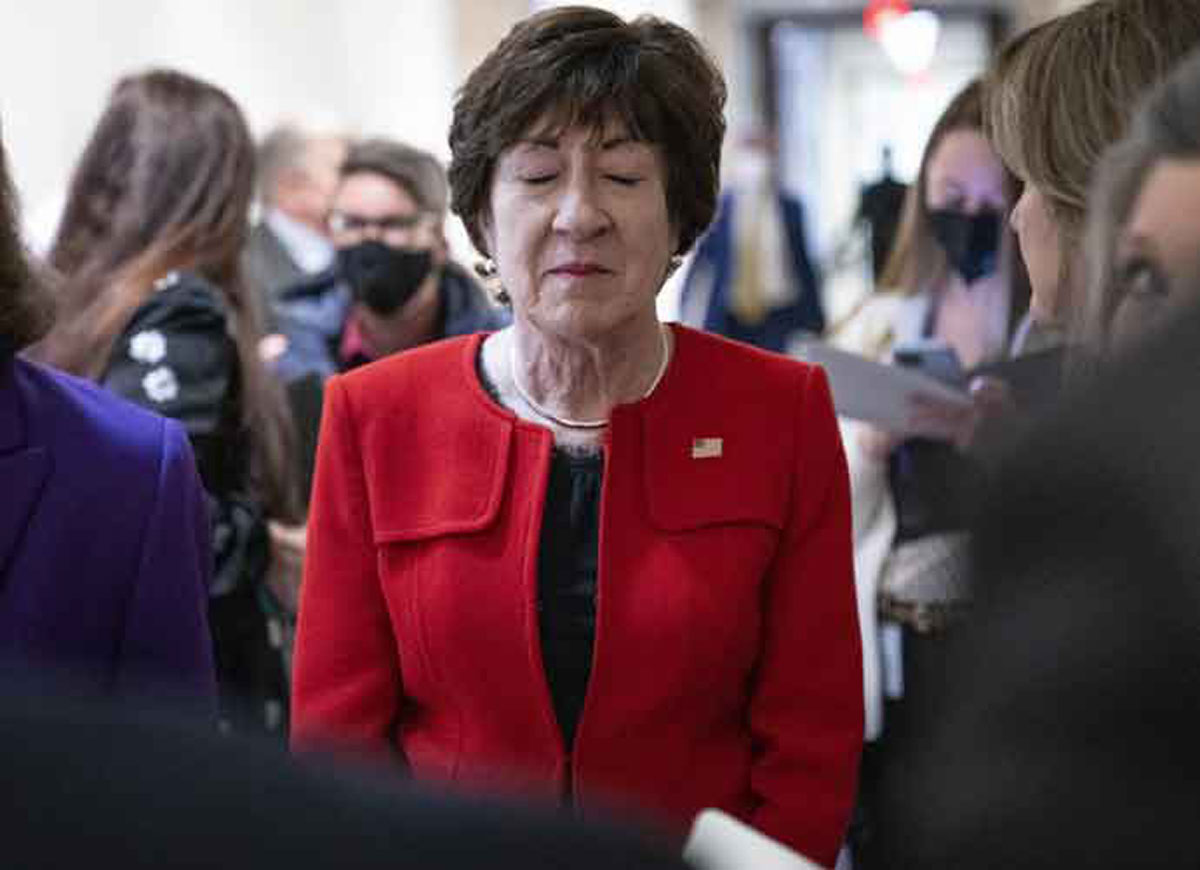
Sen. Susan Collins (R-Maine) formally entered the 2026 Senate race Tuesday, betting her brand of bipartisan governance can withstand strong Democratic opposition in a state that has trended left in recent elections.
Collins may be best known for her votes to confirm Supreme Court Justices Brett Kavanaugh and Neil Gorsuch, after being promised that they would not vote to overturn Roe v. Wade. She later called their votes to overturn it “inconsistent” with what they told her.
Collins announced her bid for a sixth term as control of the Senate hangs in the balance this fall. In a campaign statement, she framed her candidacy as a choice for experience and steady leadership in a polarized Washington.
“I have always worked across the aisle to solve problems. Maine needs experienced, steady leadership that focuses on getting things done,” Collins said in her announcement, underscoring her long record of bipartisan work.
In addition to her written statement, Collins released a brief social media video dubbed “Unboxing 2026,” in which she opened a box of New Balance shoes — a nod to a Maine-based brand — and announced her intent to run.
Collins’ reelection pitch comes in a high-stakes environment. Maine supported the Democratic presidential ticket in 2024, and Democrats view her seat as a top pickup opportunity. Her top Democratic rivals include Gov. Janet Mills and oyster farmer and political newcomer Graham Platner.
Mills has been sharply critical of Collins’ approach, particularly on issues like immigration enforcement and border policy. In campaign statements, Mills argued that Collins’ experience did not equate to leadership.
“Seniority without a backbone is just tenure, and after decades in Washington, Senator Collins has failed to demonstrate the leadership required in this dangerous moment in history,” Mills said, attacking Collins’ record.
Platner, raising substantial funds and attention, has echoed similar themes. In an X post, he pointed to Collins’ long tenure and said it should disqualify her.
“That’s just one of a hundred reasons she doesn’t deserve a sixth term,” Platner wrote about Collins’ decision to seek another term.
Political observers say Collins’ strategy will hinge on convincing Maine’s large independent and moderate voter blocs that her experience will yield tangible results. She is one of the few Republicans to have won statewide office in Maine in recent years, and her ability to court crossover voters helped her win in 2020 even as Democrats performed strongly at the top of the ticket.
Still, Collins faces headwinds. President Donald Trump has criticized her for breaking with party orthodoxy on several votes, including her support for a resolution to limit military action in Venezuela without congressional approval.
Trump’s attacks on her raise the stakes in a Republican primary, even if no formal challenger has emerged with Trump’s endorsement.

Europa Monitor is a seasoned News Editor with over a decade of experience in journalism. Known for his editorial expertise and commitment to accuracy, Europa Monitor leads teams to deliver high-quality news content.