The war on Iran is already morphing into a war on European consumers.
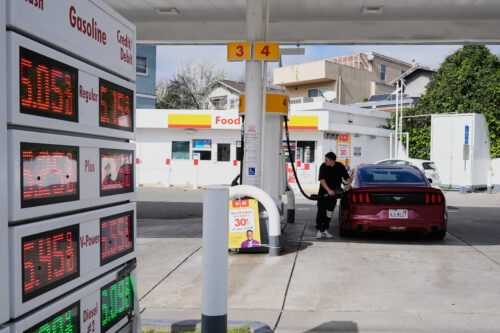
Eurozone inflation jumped to its highest in over a year at 2.5 percent in March due to soaring fuel prices, a direct consequence of a war that has blocked the world’s most important sea lane.
Consumer prices rose 1.2 percent on the month to the highest levels in over a year, the EU’s statistical office, Eurostat, said Tuesday. That’s a sharp deviation from the pattern of the last year, in which it has meandered gently around the European Central Bank’s target of 2 percent.
ECB officials are agonizing over whether — and how quickly — they need to react to the events of the last month when they next meet in late April, mindful of their failure to react in time to stop the last inflation shock four years ago.
The dilemma facing ECB President Christine Lagarde and her colleagues is that, while higher interest rates may be needed to curb inflation, they will also add to the economic problems created by higher energy costs.
Over the last week, Lagarde and other senior ECB officials have said that the Bank won’t rush to raise interest rates, but that it will react if it sees evidence that higher energy prices are spreading through the economy. They’ve also warned that this becomes more likely the longer the war drags on.

Europa Monitor is a seasoned News Editor with over a decade of experience in journalism. Known for his editorial expertise and commitment to accuracy, Europa Monitor leads teams to deliver high-quality news content.