BRUSSELS — NATO’s class of 2025 all graduated — all 32 members spent at least 2 percent of GDP on defense that was the alliance’s target.
But there were some stars — Poland and the Baltics — while some others like Hungary and the Czech Republic are in danger of being held back a grade.
NATO’s annual report released Thursday showed just how much progress the alliance made in the past year on defense spending; the 2 percent of GDP target was reached by all members for the first time since it was set in 2014. Last year, allies agreed to increase expenditures to 5 percent of GDP by 2035.
In total, the alliance spent $1.4 trillion on defense last year, in part thanks to the fierce pressure exerted by Donald Trump.
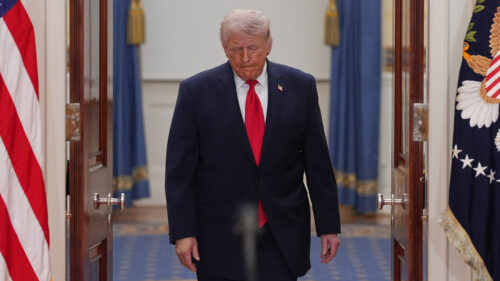
Not that it’s stopping the U.S. president from bashing NATO. On Thursday, he again railed over allied refusal to join in the war he and Israel launched against Iran.
“We’re very disappointed with NATO because NATO has done absolutely nothing. I said 25 years ago that NATO’s a paper tiger, but more importantly, that we’ll come to their rescue, but they will never come to ours,” he said. “That’s why I’m so disappointed in NATO, because this was a test for NATO. Or you can help us. You don’t have to, and if you don’t do that, we will remember it.”
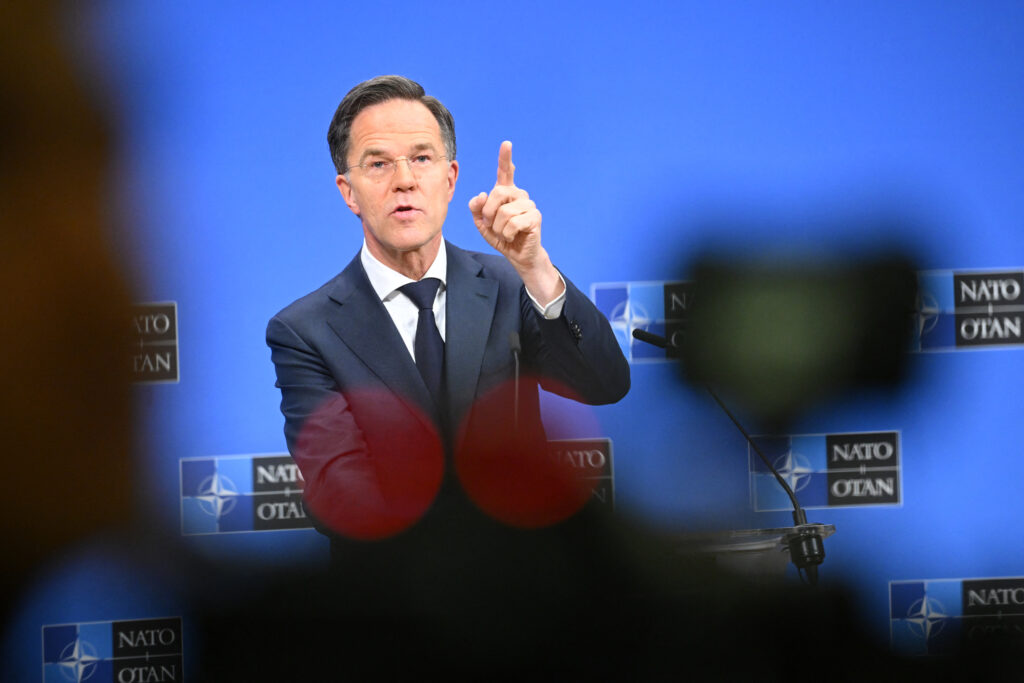
NATO chief Mark Rutte credited the U.S. administration for the spending increase. “For too long, European allies and Canada were over-reliant on U.S. military might. We did not take enough responsibility for our own security. But there has been a real shift in mindset,” he said.
Despite hitting the old target, there are significant differences among member countries, showed by POLITICO’s report card.
A grade — Teacher’s pets
Topping the list are frontline states that share a border with Russia — Poland (4.3 percent) and Lithuania (4 percent). They outshone all other allies.
Not far behind were Latvia (3.7 percent), Estonia (3.4 percent), Denmark (3.3 percent) and Norway (3.2 percent).
B grade — Above average
Several countries also made it comfortably above the historic 2 percent target. They included Finland (2.9 percent), Greece (2.8 percent), the Netherlands (2.6 percent), Sweden (2.5 percent), Germany (2.4 percent) and Turkey (2.3 percent).
The class bully: There’s a special status for the United States, which got a B for spending 3.2 percent of GDP on defense last year, but that’s a drop from 3.3 percent in 2024 — putting it into the small group of backsliders.
C grade — Barely scraping by
Then there were the allies that just about eked through.
Those were the U.K. (2.3 percent), Romania (2.2 percent), North Macedonia (2.1 percent), Luxembourg (2.1 percent), Bulgaria (2.1 percent), Croatia (2.1 percent), France (2.1 percent), Slovakia (2.1 percent) and Montenegro (2.1 percent).
Cutting it especially fine were Slovenia, Italy, Albania, Belgium, Canada, Portugal and Spain, who all spent the minimum 2 percent.
Still, Luxembourg, Belgium and Slovenia saw the steepest year-on-year spending increases.
D grade — The truants
Hungary (2.1 percent) and the Czech Republic (2 percent) may have formally hit the spending target, but a closer look at the absolute numbers shows the countries are going backward.
Budapest spent 6 percent less on defense last year compared with 2024, while Prague’s expenditure slipped by a smaller 0.3 percent.
The Czech Republic has already come under fire from allies including the U.S. for its planned decrease in spending — criticism that Hungary, led by Trump ally Viktor Orbán, has so far been exempt from. But if its spending continues the shrink, that’s unlikely to last.
“Fair burden sharing [among allies] is — and remains to be — an issue,” said one NATO diplomat, who was granted anonymity to speak freely, adding: “There’s still time” for Budapest and Prague to change course by 2035.

Europa Monitor is a seasoned News Editor with over a decade of experience in journalism. Known for his editorial expertise and commitment to accuracy, Europa Monitor leads teams to deliver high-quality news content.