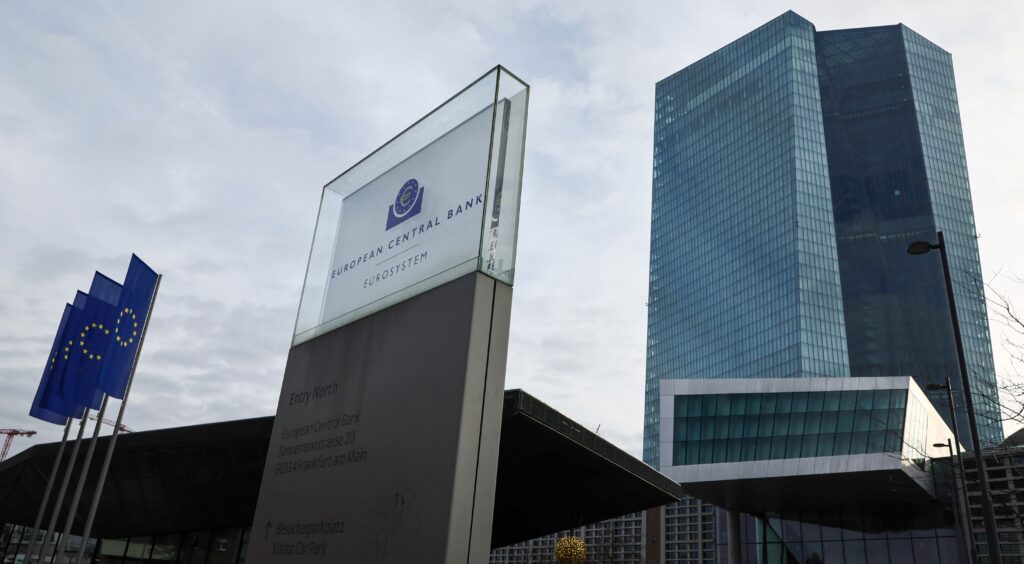
BRUSSELS — The EU’s securities regulator is recruiting for a new boss with the vision to oversee its metamorphosis into a powerful financial watchdog.
Financial experts say centralized supervision is crucial to establishing an EU-wide capital market to enable the bloc to compete economically with the U.S. and China. But jockeying among national governments is complicating efforts to hire the watchdog’s leader.
The Paris-based European Securities and Markets Authority (ESMA) is sifting through CVs for the chairperson job, rating hopefuls from countries such as Denmark, France, Germany and Italy, according to six people briefed on the race. ESMA currently oversees a few firms, but its role is largely limited to writing technical rules for the finance sector and helping facilitate coordination between national watchdogs, which police their own markets.
The EU regulator aims to publish a gender-balanced shortlist of two to three candidates by the end of May and have a new boss behind their desk in Paris from November. But it’s up to EU leaders to decide how much weight the post will carry — a key consideration for Brussels’ decade-long initiative to create a European financial market to rival Wall Street and The City of London, dubbed the Savings and Investments Union (SIU).
Political momentum behind the project has ramped up, as the indebted bloc bids to turbocharge its economy by encouraging EU citizens to invest some €11 trillion in cash savings lying in their bank accounts. This would add depth to the continent’s capital markets and help reduce the risk of European companies remaining undersized or leaving the bloc.
All 27 leaders are expected to call on EU lawmakers to reach a political deal on the legislative package for supervision and markets integration by year-end when they convene for Thursday’s summit in Brussels, according to draft conclusions obtained by POLITICO. Two diplomats said more detailed conclusions could emerge when they next meet in June. Although it’ll be up to finance ministers to deliver the legislative deal.
If EU lawmakers embrace Brussels’ proposed changes, the chairperson would oversee a powerful agency that would police the bloc’s most important financial plumbing firms. These include stock exchanges, such as Deutsche Börse and Euronext, and clearinghouses, such as Euroclear and Clearstream, which are crucial middlemen that handle market deals. Smaller firms would continue to be policed by national watchdogs.
But if EU lawmakers reject the proposals, ESMA could just end up responsible for corralling national authorities, and perhaps get an extra license to supervise a handful of crypto firms. This leaves the selection board with the challenge of picking a candidate whose importance will be dictated by vying national interests, timing issues and the EU’s ongoing game of musical chairs for prestigious posts.
“We need to have a personality that can embody a stronger ESMA and stand up against EU governments that are protecting local interests,” Karel Lannoo, the chief executive of Brussels think tank CEPS, who’s following the race closely, told POLITICO. “The Parliament will certainly want that. But I believe that member states are still afraid.”
That said, momentum for an EU watchdog is building. The finance ministers of Germany, France, Italy, the Netherlands, Poland and Spain have all thrown their weight behind EU supervision. The ministers last week ramped up the pressure for quick progress in a letter to the heads of the EU’s institutions, urging the bloc’s governments to reach an agreement before the summer break.
That’s a tight deadline to find a win over a qualified majority of 15 countries, representing at least 65 percent of the EU population, to pass the supervisory reforms — especially amid fierce resistance from smaller countries like Ireland and Luxembourg, which oppose ceding their supervisory powers to ESMA.
Musical chairs
National politics has a habit of confusing the selection processes of top EU jobs, which are determined by candidates’ passports and what posts countries possess — or pursue.
Spain, Germany and the Netherlands, for example, are gunning for the next presidency of the European Central Bank in 2027 and will have to decide where to spend their political capital. Nine countries are also competing to host the EU’s next customs authority, paving the way for horse-trading behind the scenes. This only complicates the work of the selection board responsible for picking the best candidate to lead ESMA.
The deadline for applications closed two weeks ago. It’s unclear how many people are vying for the post, as ESMA has declined to comment on the confidential process. Last time, 58 people applied for the job. Some prominent names have emerged as potential contenders, nonetheless.
Among them are France’s Natasha Cazenave and Marie-Anne Barbat-Layani, despite Paris’ bid to secure the chairmanship of the EU’s banking regulator — which is also based in Paris. It’s unlikely that other EU countries will accept France leading both agencies.
The German government will also have to decide whether it’s worth lobbying for Klaus Löber to succeed his compatriot Verena Ross, all while chasing the ECB.
Two Italians are also in the running. There’s Carmine di Noia, who came second in the race for ESMA chair in 2021, and Carlo Comporti, who is a commissioner at Italy’s markets regulator CONSOB and currently sits on ESMA’s management board. There’s a chance the two Italian bids could get in the way of each other, and they’re disadvantaged by the fact that an Italian recently won the race to lead the EU Anti-Money Laundering Authority.
Spanish regulator Rodrigo Buenaventura, seen by officials as a frontrunner for the top job, didn’t enter the race.
If large countries torpedo each other’s bids, a compromise candidate from a small or mid-sized country, such as Denmark, the Netherlands, Greece, or Portugal, could emerge from the fray. One such name being floated is Karen Dortea Abelskov, the Danish state secretary for financial affairs.
The potential candidates named in this story did not respond or declined to comment when POLITICO contacted them.
Nicolas Véron, senior fellow at the think tank Bruegel, said the victor is likely to be “a head of a national competent authority that is active in capital markets.”
Whoever wins the top job, expectations for the new chair are high. As ESMA put it in its job advertisement: “The role and responsibilities are likely to evolve.”

Europa Monitor is a seasoned News Editor with over a decade of experience in journalism. Known for his editorial expertise and commitment to accuracy, Europa Monitor leads teams to deliver high-quality news content.