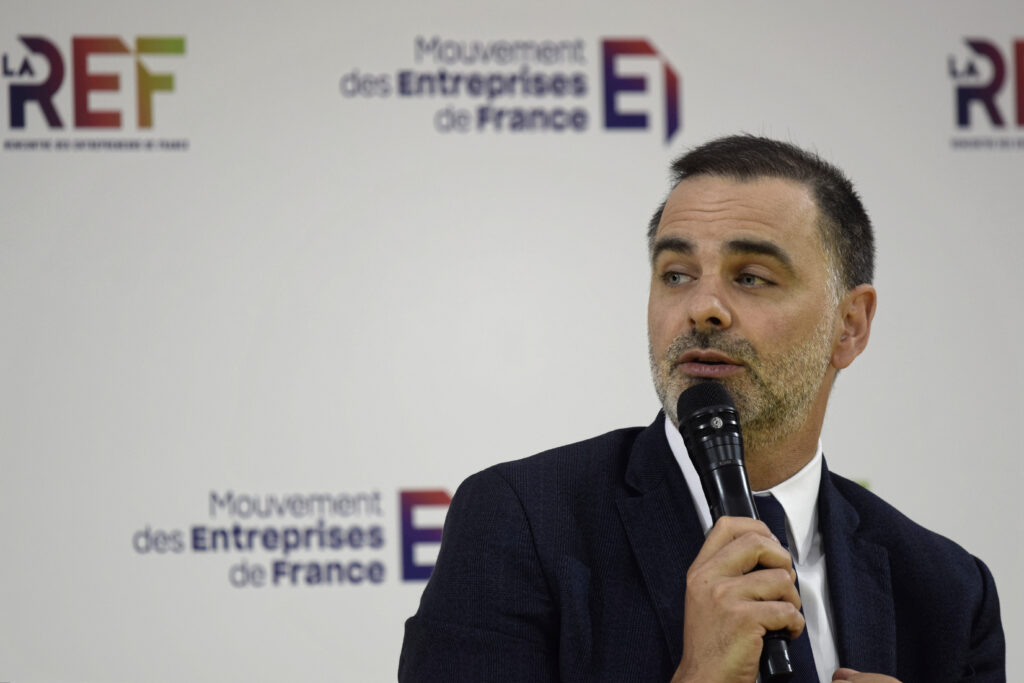
PARIS — As he headed into the office on a stormy Wednesday morning last week, French customs official Yann Favennec was expecting the day to be good — but stressful.
Favennec, the 47-year-old chef de projet of Lille’s bid to host a new EU customs authority, gathered his four-person team at 8:30 a.m. in their office on the outskirts of Paris. With coffee and croissants on their desks and vote simulators on a big screen, they hunkered down to follow the nine-way contest.
Top-level lobbying, strategic opinion-making and close attention to European lawmakers’ ambitions to shape the process made Lille a strong contender from the start. The city’s location, under an hour by train from Brussels, a headquarters ready to move in to, and a national customs agency with deep experience all helped.
When Lille was declared the winner soon after lunch “there was an explosion of joy in the office,” Favennec told POLITICO, recounting the story behind the success.
The newest EU agency, with 250 staff, is the cornerstone of a customs reform meant to strengthen cooperation between the bloc’s 27 national agencies and handle an escalating influx of packages shipped by e-commerce platforms.
The charm offensive featured lobbying by French President Emmanuel Macron on the sidelines of international meetings and missions by bid ambassadors to even the EU’s smallest members. Apart from Rome’s challenge in a nail-biting finale, almost everything went to plan.
Pascal Lamy, the veteran trade diplomat who advised on the bid, said France learned from the mistakes it made when Lille lost out to Amsterdam in the 2017 race to host the European Medicines Agency.
“We won because we lost last time. That was a big shock. We looked at what didn’t work last time, and we did the opposite,” the former World Trade Organization chief and EU trade commissioner told POLITICO. “We prepared a better dossier than last time, and we did a better job of organizing our political and diplomatic lobbying.”
First-mover advantage
France was first out of the starting blocks last November, inviting officials from around the bloc for an open day in Lille that had the atmosphere of a school excursion.
The delegation toured the white tower that was to host the authority, visited the Flemish old town, and interrupted lessons at the European school, named after late Commission president Jacques Delors. At the end of the day, several guests acknowledged that being the first to declare was an advantage in itself.
In reality, the behind-the-scenes lobbying had started far earlier, with France assuming the role of thought leader on how to cope with the exponential growth in e-commerce packages flooding into the EU from online retailers like China’s Shein and Temu. Paris sounded the alarm on unsafe products months before making waves with a unilateral move to impose its own handling fee on inbound parcels.
An official in the European Parliament with direct knowledge of the vote said French officials had tested the waters on Lille’s chances during a visit to Paris’ Charles de Gaulle airport last May. “Most other candidates only really started in January, which was simply too late,” said the official, who was granted anonymity to speak freely on the day of the vote.
France also recognized the wish of European lawmakers to play a more influential role in the agency’s seat selection.
Already in November, bid ambassador Laurent Saint-Martin told POLITICO that the Lille team would reach out as soon as possible to MEPs. Warsaw was the only other candidate to actively court MEPs, who under a new twin-track voting system got an equal say in the decision along with EU governments.
Favennec, the project manager of Lille’s bid, hailed the “tremendous lobby work” done by Macron, which continued until the day of the vote. Saint-Martin, a former trade minister, toured countries that weren’t fielding candidates starting in Malta. Lille even translated its brochure into all EU languages, including Irish Gaelic and Greek.
Big Wednesday
For Lille the biggest surprise came on the day of the vote.
The selection followed an intricate procedure, involving ambassadors from the 27 EU members and two lawmakers representing the European Parliament: Dutch MEP Dirk Gotink of the European People’s Party and German Green Anna Cavazzini.
Under the two-stage process, each side met separately to whittle the field from nine to two. If the same candidate was nominated by both, it would win by a knockout. But if there was a double match the contest would go to a run-off.
The Council quickly arrived at its duo of Lille and Rome, forcing lawmakers to make a call. “Either we wouldn’t select Lille at all on our side — which was almost impossible as it had broad support — or we choose to exercise more institutional power and back the same two,” the Parliamentary official said.
To keep the contest alive, EPP lawmakers transferred their support from Warsaw to Rome, which had not featured among the early favorites.
For Favennec, who was getting play-by-play updates by text message, the most stressful moment was during the parallel voting phase. He was surprised that Rome, and not the Polish capital, had emerged as the challenger after the Council vote.
After both institutions backed the same cities, the Cyprus presidency of the Council called a 30-minute time out.
Working the phones
In the first round of the run-off, 24 capitals voted for Lille, with only three backing Rome.
“They went back to the bloc-vote approach as soon as they could,” said the Parliamentary official, referring to the 2024 race to select a seat for the EU’s Anti-Money Laundering Authority. In that vote, by a simpler procedure, the Council sidelined lawmakers by voting as a bloc to pick Frankfurt.
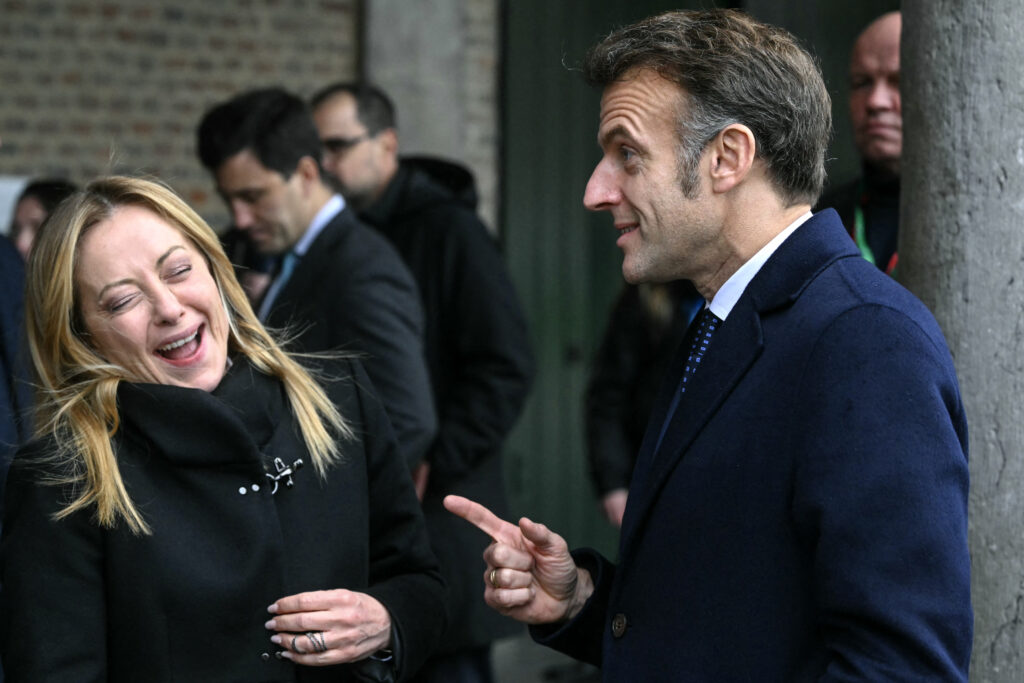
The first-round result led the Parliament to call another time out: It was then that Macron and Italian Prime Minister Giorgia Meloni hit the phones to try and sway support for their bids, according to two people close to the process.
With the required majority coming down with each vote, it was clear after the second round — when Lille obtained 38 out of a possible 54 votes — that it would have enough votes to win in the third round. In that head-to-head, a two-thirds majority of 36 votes would suffice.
“At that stage we were confident, not triumphalist but confident,” recalled Favennec. “The last round only confirmed our lead over the Italians.”
And so it came to pass: Lille scored 36 votes in the third round — exactly the number it needed to win. Cue the explosion of joy back in Paris.
One more time?
Now that the excitement has died down there is broad agreement that the best team won, with lead lawmaker Gotink praising Lille for building its bid on the “long and strong history of excellent work on customs” in France.
But there are misgivings that the winner came from a founding EU member country within commuting distance of Brussels, while newer arrivals from further afield again went away empty handed. Croatia, which fielded its capital Zagreb, was handicapped as a small country with only two members on the committee that voted on behalf of the Parliament.
Several EU diplomats said they were wary of repeating the tortuous exercise, but complimented the Parliament for standing its ground and securing more influence. “The European Parliament played it well,” one had said before the vote.
After a celebration in Lille’s old stock exchange last Thursday, Favennec is back on the job. He’s now liaising with Brussels on logistics, including ordering furniture for officials who will start arriving later this year. The EU Customs Authority is due to be fully operational in 2028.
Giorgio Leali reported from Paris and Koen Verhelst reported from Brussels.

Europa Monitor is a seasoned News Editor with over a decade of experience in journalism. Known for his editorial expertise and commitment to accuracy, Europa Monitor leads teams to deliver high-quality news content.