BRUSSELS — U.S. President Donald Trump unloaded his frustration with NATO allies in a bad-tempered meeting with Secretary-General Mark Rutte on Wednesday — and indicated he was considering reprisals for lack of support over the war in Iran.
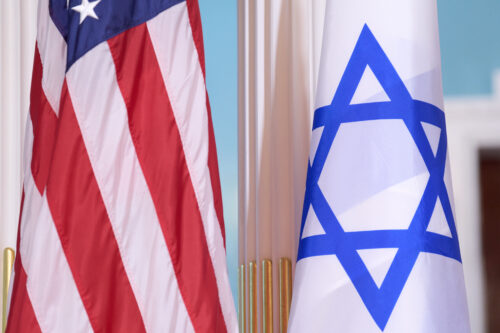
Rutte met Trump behind closed doors as part of a long-scheduled visit that quickly turned into a life-support mission after the U.S. president repeatedly threatened to quit the alliance because countries like Spain and France refused to back the U.S.-Israeli conflict with Tehran, which has reached a fragile ceasefire.
According to two European officials, and a person familiar with the matter, who were briefed on the talks, Trump used the White House meeting as a venting session for the president to air out his frustration about Europe’s refusal to participate in the Iran operation.
“It went shit,” said the first European official. “The conversation was nothing but a tirade of insults.” Trump “apparently threatened to do just about anything.”
That official and the person familiar with the matter said Trump also signaled he was considering options for reprisals, but didn’t go into detail.
The same two people and a third European official briefed on the meeting — who like others in this article were granted anonymity to divulge sensitive details — said the U.S. president gave those present the impression he wanted concrete actions from allies to help reopen the Strait of Hormuz as soon as possible.
However, a White House official said that the president made no demands of the alliance in his conversation with Rutte.
“As President Trump said yesterday, NATO was tested, and they failed,” the White House official said. “He has zero expectations for NATO at this point and did not ask them for anything, even though it’s a fact they benefit from the Strait of Hormuz far more than the United States.”
Following the meeting, the U.S. president publicly berated NATO allies and revived the specter of his campaign to annex Greenland.
“NATO WASN’T THERE WHEN WE NEEDED THEM, AND THEY WON’T BE THERE IF WE NEED THEM AGAIN. REMEMBER GREENLAND, THAT BIG, POORLY RUN, PIECE OF ICE!!!” he wrote on Truth Social.
“None of these people, including our own, very disappointing, NATO, understood anything unless they have pressure placed upon them!!!” Trump added Thursday.
NATO spokesperson Allison Hart told POLITICO that Rutte and Trump “had a very frank conversation,” but pushed back on allegations it went badly, calling it “constructive.”
“I sensed his disappointment about the fact that he felt that too many allies were not with him,” Rutte said at an event on Thursday.
The second European official told POLITICO that despite outward appearances of a contentious meeting, Rutte’s visit was well-timed in that it allowed Trump to blow off steam. The president’s Truth Social posts following the meeting were broad and did not include any specific threats of actions aimed at punishing NATO or individual members, they argued.
“That’s a climbdown compared to other comments of his,” the person said. “It’s still a volatile time, but it’s fortunate for the alliance that he was there at this particular moment.”
So far, NATO countries at the alliance’s Brussels headquarters have not been briefed on the meeting, according to two senior alliance diplomats, nor have they begun discussing the deployment of military equipment to reopen the strait.
Standing ready
U.S. allies have repeatedly pledged to help restart shipping along the Strait of Hormuz trade chokepoint — but only once the fighting fully stops.
German Chancellor Friedrich Merz on Thursday said he had “encouraged” Trump to “pursue the negotiations in earnest” on ending the war with Iran during a call with the president on Wednesday.
“At the same time, I assured him that, following a peace agreement, Germany will help ensure freedom of navigation in the Strait of Hormuz, provided there is a mandate and a viable plan for doing so,” he told reporters. “We do not want this war — which has become a transatlantic stress test — to further strain relations between the United States and its European NATO partners.”
On Wednesday, France’s top military commander, Gen. Fabien Mandon, similarly said Paris was looking at “strictly defensive” military options to assist.
“For the past week, we have been hosting officers from various nations who have chosen to participate in this initiative aimed at helping to restore maritime navigation,” he said. “The planning phase is moving forward, with the shared goal of promoting the safety of maritime navigation in this strategic area.”
Last week, a U.K.-led coalition of 41 nations backed the idea of fresh sanctions and further diplomatic pressure on Iran over its closure of the critical strait — but clearly indicated they would not help militarily whilst the conflict continued.
Asked by POLITICO whether London planned to host a follow-up meeting, U.K. Defense Secretary John Healey on Thursday said he had “nothing to announce at this stage.”
During a speech in Washington on Thursday, Rutte defended allies’ reaction to the Iran war — even as he sought to reassure the world that the alliance was not in jeopardy.
Victor Jack reported from Brussels, Nette Nöstlinger from Berlin and Eli Stokols from Washington. Dan Bloom, Laura Kayali, Phelim Kine and Paul McLeary contributed reporting.

Europa Monitor is a seasoned News Editor with over a decade of experience in journalism. Known for his editorial expertise and commitment to accuracy, Europa Monitor leads teams to deliver high-quality news content.