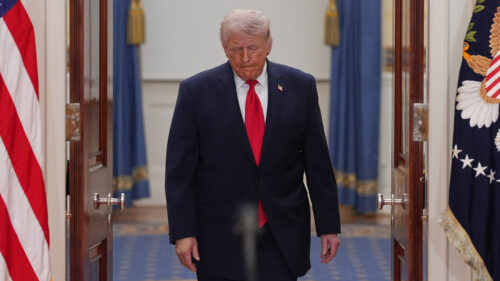
The federal government’s budget outlook under the Trump Administration is weakening, with deficits projected to grow and debt expected to reach levels not seen in peacetime, according to a new report from the nonpartisan Congressional Budget Office.
The 10-year forecast released Wednesday shows the annual deficit for fiscal 2026 is about $100 billion higher than previously expected, and deficits from 2026 to 2035 are now estimated to be $1.4 trillion larger. Over that period, federal debt held by the public is projected to climb from about 101 percent of gross domestic product to around 120 percent, exceeding historical levels.
The worsening outlook reflects several recent policy changes, including last year’s tax and spending law, the One Big Beautiful Bill Act, higher tariffs and stricter immigration enforcement. These factors, taken together, have pushed the government’s long-term fiscal picture in a more challenging direction.
Jonathan Burks, executive vice president of economic and health policy at the Bipartisan Policy Center, said the scale of projected deficits is unusual for a country not at war or in recession. “Large deficits are unprecedented for a growing, peacetime economy,” he said in a statement, though he noted there is still opportunity for corrective action.
Burks’ call for policymakers to find solutions echoes concern among fiscal watchdog groups. Michael A. Peterson, CEO of the Peter G. Peterson Foundation, described the projections as a stark message to Washington. “CBO’s latest budget projection is an urgent warning to our leaders about America’s costly fiscal path,” Peterson said in a foundation statement on the report’s release.
Peterson highlighted the role of structural pressures such as an aging population, rising healthcare costs and interest payments that outpace revenue growth. He warned that borrowing trillions of dollars without a sustainable plan could harm family budgets and long-term economic prospects.
The CBO report also notes that while revenue from higher tariffs will help offset some deficit growth—raising about $3 trillion over the next decade—those gains come with potential economic side effects, including upward pressure on inflation through 2029.
High and rising interest costs on the national debt are another factor in the projections, with debt service consuming a growing share of federal receipts. This trend means a larger portion of government spending will go toward interest payments, potentially crowding out investments in infrastructure, education, and other priorities.
Despite the grim numbers, Burks and others emphasize that the situation is not irreversible. “There is still time for policymakers to correct course,” Burks said, urging lawmakers from both parties to explore ways to raise revenue, slow spending growth, and rein in major cost drivers

Europa Monitor is a seasoned News Editor with over a decade of experience in journalism. Known for his editorial expertise and commitment to accuracy, Europa Monitor leads teams to deliver high-quality news content.