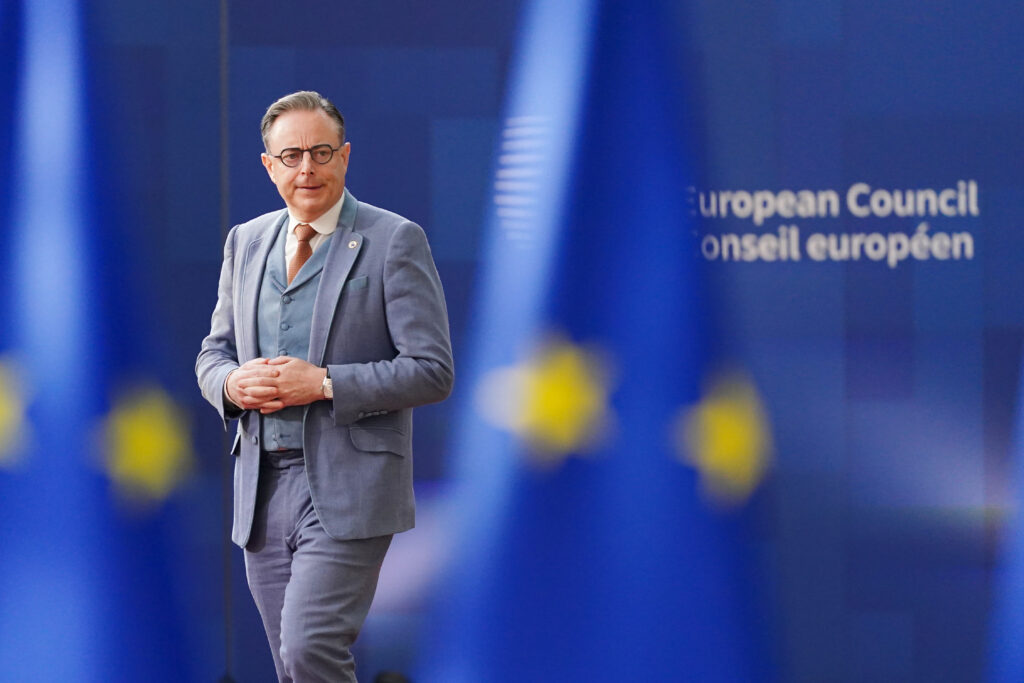
BRUSSELS — The EU must protect strategic industries such as chemicals and pharmaceuticals from Chinese oversupply — even if that means exposing the bloc to retaliation in the short term, Belgium’s foreign minister told POLITICO.
Maxime Prévot also listed metals, automotive and critical minerals as sectors in need of urgent attention, as he urged the European Commission to propose protective action.
“We need to prioritize the sectors where we can act quickly and effectively. And accept that we don’t necessarily need to provide exhaustive, universal protection down to the last detail for every type of production,” Prévot said in an interview earlier this week.
Belgium is emerging as one of the more outspoken voices in Europe’s push to take a tougher line toward Beijing, arguing the EU can no longer afford to leave key industries exposed to relentless Chinese export competition. The bilateral trade deficit grew sharply to €360 billion last year as European imports from China rose and exports fell, forcing once-mighty industrial exporters to cut production and jobs.
The comments by Prévot, whose remit includes trade, echo a letter sent by Belgian Prime Minister Bart De Wever to Commission President Ursula von der Leyen in March, in which he called on the EU executive to come up with a “strategic China plan” to address what he saw as a “systemic threat” to the EU economy.
The foreign minister, who hails from the centrist Les Engagés party, spoke after returning from a five-day trip last week to China, where he met Vice Premier He Lifeng and Foreign Minister Wang Yi. Prévot said he tried to explain to his Chinese counterparts that any EU measures wouldn’t directly target China but were instead “meant to support the EU.”
Brussels is preparing a broader rethink of its policy toward China, with commissioners due to debate the topic at the end of the month. European leaders will discuss next steps at a summit on June 18–19.
“It is likely that any initiatives we might take would be met with retaliatory measures,” said Prévot, stressing that any defensive action should be preceded by efforts to pursue a “partnership-based approach” of dialogue with the Chinese leadership.
“And that begs the real question: Is Europe prepared to endure some temporary hardship for a few years in order to stand firm behind a series of measures designed to eventually reestablish a partnership based on a level playing field?”
No time to waste
EU-China relations are at a low ebb, with officials in Brussels saying Beijing is making no effort to address concerns over public procurement or unfair subsidies raised by von der Leyen at a summit last July.
Senior Chinese officials warned last week that Beijing is ready to hit back if the bloc passes legislation that would bar Chinese firms from bidding for public contracts or equipping the EU’s critical networks.
Beijing has taken particular offense at the proposed Industrial Accelerator Act, which would set a home-team preference in public procurement for the EU and for “trusted partners” with which it has a trade agreement. China isn’t among them.
Another irritant is the EU’s draft Cybersecurity Act, which would require telecom operators to ban Chinese tech champion Huawei from their supply chains.
“The European Union will only be able to respond to technological and industrial showdowns by standing united behind a strategy that is as widely shared as possible,” Prévot said.
“If we cannot be an ox, we will remain a coalition of frogs,” he added, evoking the image of a weak and disorganized group that produces little more than noise.
“That is a luxury we can no longer afford; with each passing month, it is like a decade of accelerated economic development.”

Europa Monitor is a seasoned News Editor with over a decade of experience in journalism. Known for his editorial expertise and commitment to accuracy, Europa Monitor leads teams to deliver high-quality news content.