
Czech Prime Minister Andrej Babiš and President Petr Pavel are at loggerheads over who will represent Prague at the annual NATO summit in Turkey in July.
Pavel has attended all annual NATO summits since taking office in 2023, but Babiš, who returned to power in 2025, has pushed back, insisting the president can’t be part of the official government delegation.
“What would that look like, would we all appear there at the same time?” Babiš asked, claiming the scenario made no sense and would also contradict Czech security protocol rules.
The Czech constitution gives the president the authority to “represent the state externally” under Article 63, but presidential decisions that are taken under that provision require government approval — leaving it unclear whether Pavel can force his way onto the official delegation without backing from Babiš.
Since Babiš returned to power last year, his relationship with Pavel has been adversarial, shaped by deep political and personal differences. Pavel, a pro-Western former NATO general, has repeatedly clashed with the populist Babiš over everything from foreign policy to democratic norms and the PM’s long-standing business conflict-of-interest controversies.
The duo also went head-to-head in the 2023 presidential election, which Pavel won by almost a million votes, a substantial margin in this country of 10.9 million.
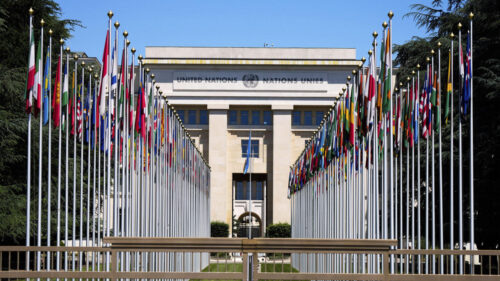
Pavel — who has also represented Czechia at the U.N. General Assembly and, more recently, at the May 13 Bucharest Nine and Nordic Allies Summit, a gathering of NATO allies — has even offered to cover the costs of his attending the NATO summit, and is considering legal proceedings against Babiš for blocking his bid to go.
He told Czech media it would be “embarrassing” if he didn’t attend, suggesting he could participate in informal meeting of heads of state at the summit while Babiš handles official matters.
“If the government were to decide in June in a way that would effectively exclude him from his constitutional duties, he would have to consider other instruments,” a spokesperson for Pavel told POLITICO, a reference to a possible competence lawsuit before the Constitutional Court.
“The Government of the Czech Republic will discuss the composition of the delegation to the NATO Summit in Ankara during the month of June,” a spokesperson for Babiš told POLITICO. “Until then, it will not deal with this issue.”
Babiš said in March that he wants to attend the summit in person to defend his government’s handling of defense spending to U.S. President Trump. His government is on track to cut core defense spending to around 1.8 percent of GDP this year, well below the 2 percent NATO target, even though the alliance has agreed to ramp up defense spending sharply by 2035.
“It is logical that [Foreign Minister Petr] Macinka and I will go to the summit to explain this to President Trump, and not the president [Pavel], who criticizes us for it abroad,” Babiš said at the time.
However, Defense Minister Jaromír Zůna said earlier this month that Prague plans to add CZK 20 billion (€822 million) to the country’s defense budget before the summit to meet the alliance targets. That increase would largely reverse the cuts the Babiš government made in March.
“Babiš wants to go to Ankara, so they will spit in the face of President Pavel and show him that he is not able to do his job and that he’s a weak president. That’s the real reason,” former Foreign Minister Jan Lipavsky told POLITICO.
When Babiš and Pavel met earlier this month to discuss the issue, the prime minister arrived 15 minutes late, which Pavel regarded as impolite. Babiš retorted that “I am not his subordinate.”
Foreign Minister Macinka voiced support for Babiš, denying that Pavel’s rejection of Macinka’s controversial pick for environment minister, Filip Turek, had affected matters.
“It’s not revenge. It’s about the fact that someone in our country [Pavel] has a dominant influence over politics, over policymaking, over the executive, which the [office of the] president does not,” Macinka said recently in a debate. Macinka’s office did not respond to a request for comment.
NATO, for its part, doesn’t want to get involved.
“The leader of the delegation representing an Ally at a NATO Summit is for each Ally to decide,” a NATO official told POLITICO.
Oana Lungescu, a former NATO spokesperson, pointed to Pavel’s attendance at previous NATO summits, suggesting “it would be highly unusual to change that.”
A recent survey by the NMS polling agency revealed that 57 percent of Czechs want Babiš to represent their country at the summit, while 47 percent want Pavel to attend.

Europa Monitor is a seasoned News Editor with over a decade of experience in journalism. Known for his editorial expertise and commitment to accuracy, Europa Monitor leads teams to deliver high-quality news content.