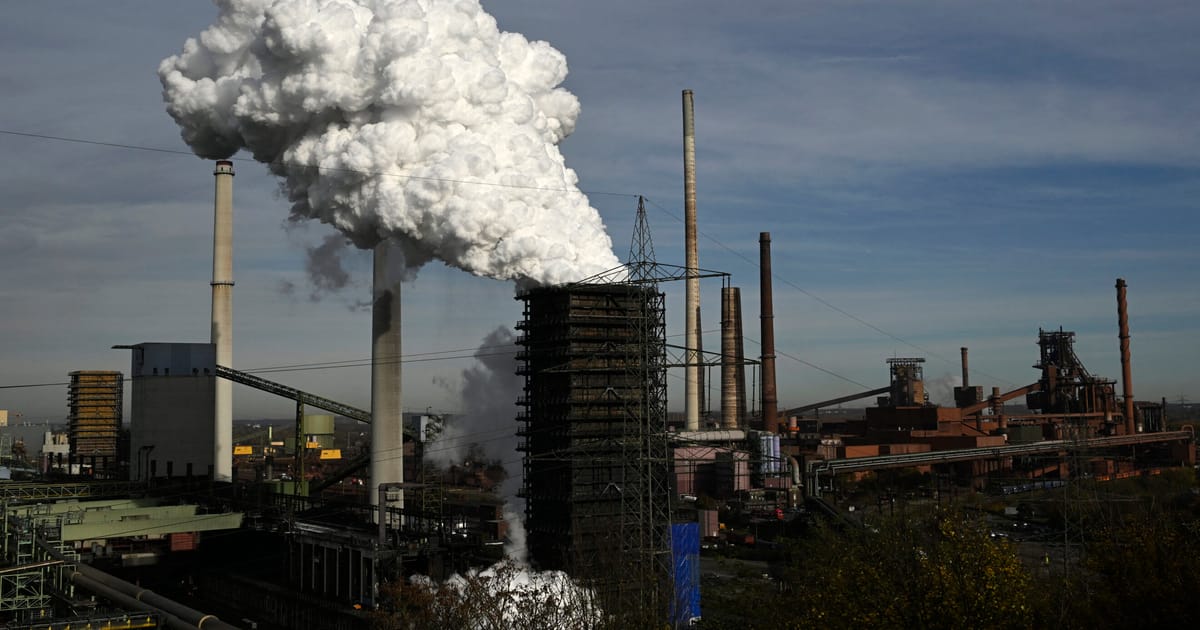
“This decision will have immense consequences for the Ukrainian steel industry and the country’s economy, ultimately affecting Ukraine’s resilience and ability to finance its fight for existence,” said Karlsbro, who plans to speak with Šefčovič on Thursday.
Pain for Ukraine
Ukraine will still be able to access a pool of residual quotas that are open to the countries that did a deal with the EU. The eventual tariff-free exports might therefore end up higher.
But for Kyiv, the real discussion is a different one: EU membership.
Deputy Prime Minister Taras Kachka said Kyiv views “the current arrangement as a starting point,” and that the final deal “should take into account Ukraine’s path towards EU accession, the logic of deeper economic integration, and the perspective of full access to the EU internal market.”
Ukraine was given some preferential treatment by the EU, a second senior official explained. That’s because the reference period, which overlaps with the start of Russia’s full-scale invasion, could not be adjusted. But Ukraine did receive some bilateral quotas in categories for which it formally did not qualify because its share of supplies was below a 5 percent threshold.
The first official said the EU was not looking to grant other industries similar protection but rather that it remains open to working together with other economies to address global steel overcapacity.
“Call it a club, call it an alliance, call it whatever you like: The idea that we come together with like-minded partners on this global challenge of overcapacity,” they said. “In an ideal world, there is fair competition and a level playing field. Unfortunately, we don’t seem to live in an ideal world.”
This article has been updated.

Europa Monitor is a seasoned News Editor with over a decade of experience in journalism. Known for his editorial expertise and commitment to accuracy, Europa Monitor leads teams to deliver high-quality news content.