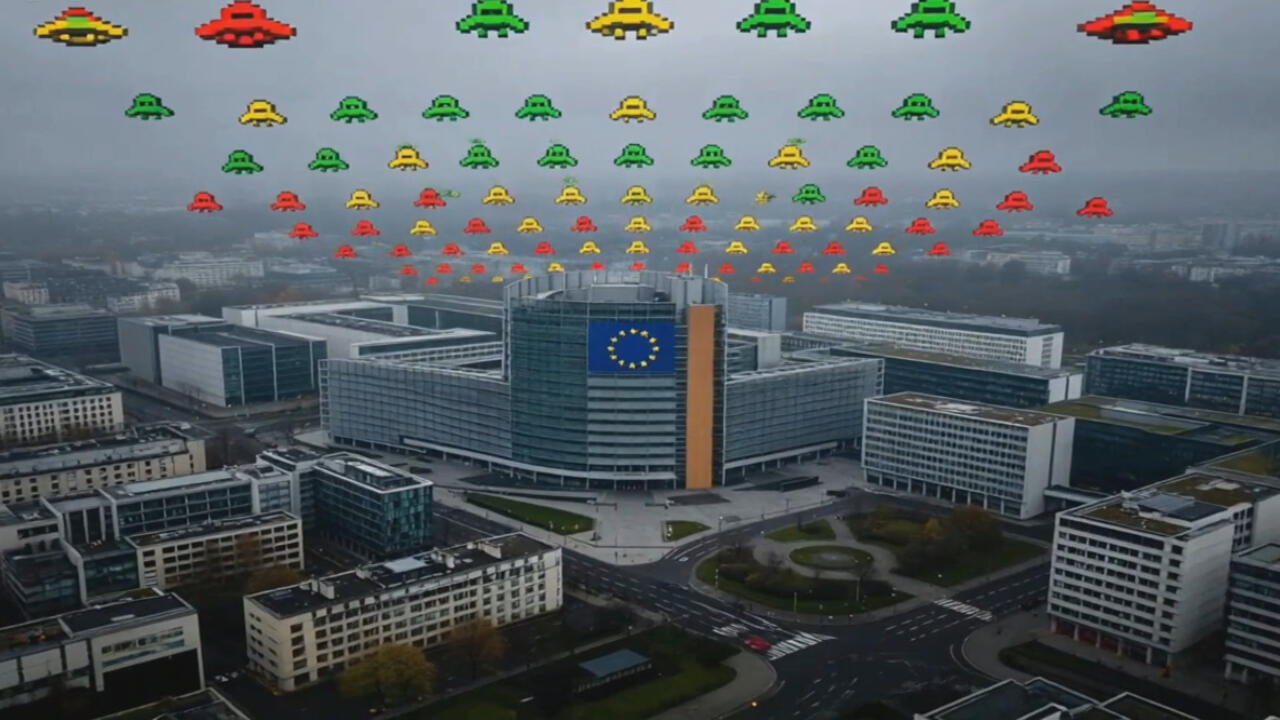
This week’s special edition of Talking Europe asks whether the EU is ready for the disruption that comes with Artificial Intelligence. It is the most important technological revolution of the century, and is set to impact every aspect of our lives.
Whether you are working in a small business or in an industrial giant, whether you are a student, a musician or an author – the anxiety is real. As Nobel prize-winning economist Philippe Aghion puts it: “AI means new ideas and new activities, but it may be that job destruction will occur before job creation. Countries need to adapt.”
Our report covers half a dozen EU countries to find out how they are preparing, from grassroots education and upskilling efforts in rural Ireland, to the manufacturing sector, which sees AI and robotics as key to improving productivity and helping offset a shrinking workforce.
We also look at global competition: How does Europe plan to catch up with leaders in the United States and China when it comes to AI infrastructure? We visit one of the EU’s first “AI factories” in Luxembourg and take a look at the Meluxina supercomputer, which provides European startups with processing power for their AI models. Indeed, the question of digital and AI sovereignty has become key given that so much AI infrastructure is based in the US, meaning many European organisations are rethinking their dependence on Silicon Valley.
And just as important for the EU: The creative sector, where European artists remain influential figures worldwide. For many musicians, AI can be both a tool and a threat to their creativity as AI-generated music has begun to capture revenues on streaming services. Electronic music pioneer Jean-Michel Jarre tells FRANCE 24; “What differentiates chaos from democracy is, of course, the rules. We creative artists deserve our share, and we should be considered as real partners at the table.”
While AI is set to transform the economy, many in Europe still remain wary, believing in the need for safeguards. While two-thirds of Europeans say AI can improve workplace productivity, 84 percent insist that it requires careful management. Balancing that fine line between innovation and regulation will be crucial for the EU.
Report by Luke Brown and Renaud Lefort.
Programme prepared by Isabelle Romero, Perrine Desplats and Oihana Almandoz.

Europa Monitor is a seasoned News Editor with over a decade of experience in journalism. Known for his editorial expertise and commitment to accuracy, Europa Monitor leads teams to deliver high-quality news content.