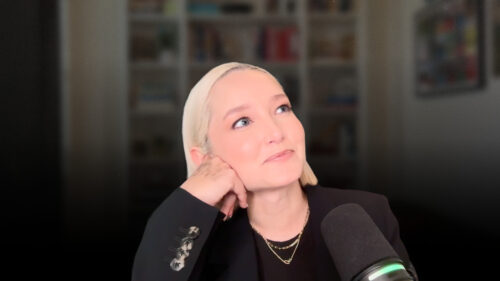
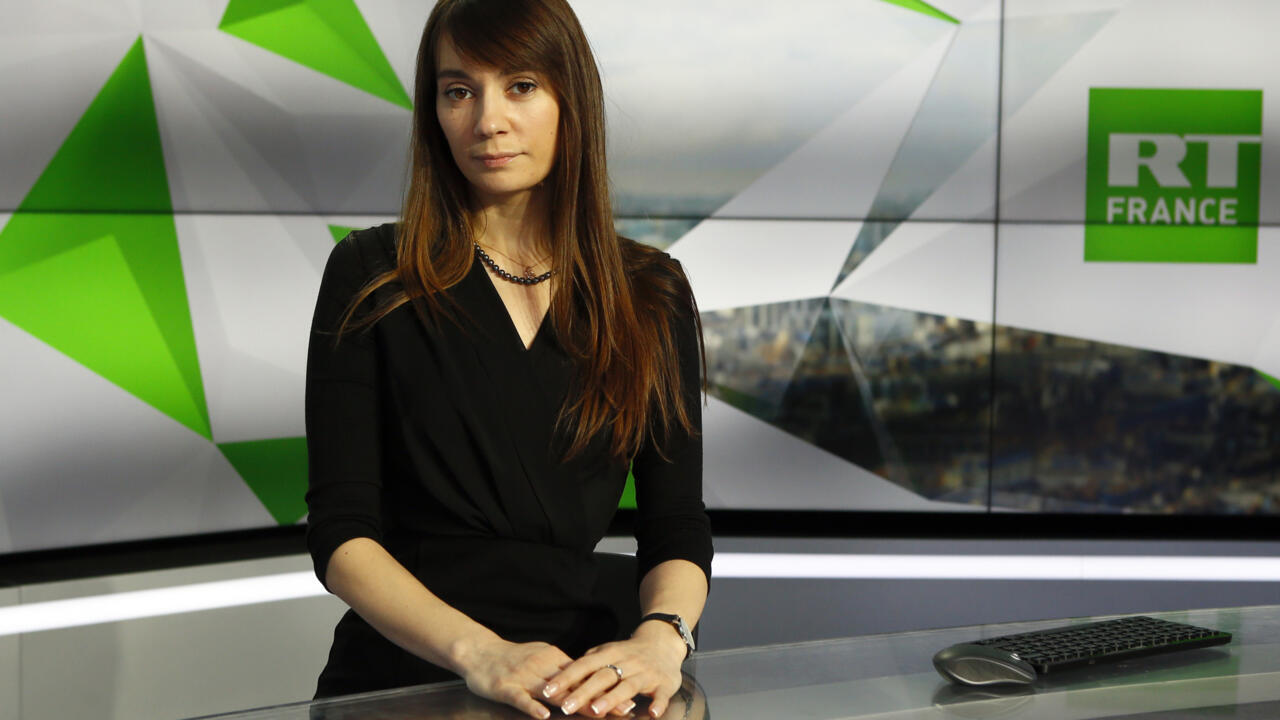
The soft-spoken commentator delivered her views in fluent, Russian-accented French, as she appeared this week on one of France’s most influential television channels.
“Russia is capable of helping the French economy,” Xenia Fedorova said on the rolling news channel CNews, insisting it would be “mandatory” for President Emmanuel Macron’s successor next year to maintain good relations with Moscow.
Fedorova is the former head of the French arm of the Russian state-run channel RT, which was banned in France after Vladimir Putin invaded Ukraine in 2022.
Read moreFrench film giant Canal+ to blacklist hundreds over petition against right-wing owner
While RT France was shut down in 2023, Fedorova did not disappear from public view.
Instead, she has gained an even wider audience in France, securing a coveted role as a commentator for outlets within conservative billionaire Vincent Bollor’s media empire.
The 45-year-old appears regularly on CNews and Europe 1 and writes a column for Le Journal du Dimanche, spreading Kremlin talking points about Ukraine and the West.
As France is heading into one of its most consequential elections, authorities, disinformation experts and journalists in mainstream media are increasingly worried about Fedorova’s message.
France prides itself on freedom of speech, and Fedorova’s trajectory captures a contradiction at the heart of the media landscape, where legal freedoms clash with fears of foreign propaganda.
While authorities express frustration with the commentator’s pro-Kremlin line, there is little they can do.
‘Putin’s bidding’
“Everyone is free to choose their own editorial line,” Foreign Minister Jean-Noël Barrot said Friday.
“But opening up your airwaves and columns to this woman is simply doing Vladimir Putin’s bidding,” he said, however, adding his hands were tied.
“In a democracy, one can spread lies without being sent to a gulag.”
Government spokeswoman Maud Bregeon said Fedorova’s claims shifting responsibility for Russia’s invasion on Ukraine were “very serious”.
“It is extremely shocking to hear that such statements can be broadcast during prime-time hours today in France,” she added.
Valerie Hayer, leader of the Renew group in the European Parliament, said on X this month she had filed a complaint with media regulator Arcom.
Freedom of expression cannot justify normalising “the systematic repetition of the talking points of a foreign state propaganda apparatus subject to European sanctions”, she wrote.
Commentator Patrick Cohen said Fedorova’s case raised tough questions.
“On what basis can one distinguish between what constitutes propaganda and what counts as a legitimate opinion?” he said.
Contacted through CNews, Fedorova did not wish to comment without a guarantee that AFP would publish her remarks in full, a request that was declined in accordance with AFP practices and guidelines. The channel did not comment.
In her book, Bannie (“Banned”) published last year, she portrays herself as a victim of state censorship.
Le Monde has dubbed Fedorova “the Kremlin’s most influential propagandist in France.”
This week the daily threw the spotlight on her ties to Bollore, saying a think tank founded by the tycoon recently organised a lunch to discuss the 2027 presidential election.
Fedorova was in attendance, along with Agriculture Minister Annie Genevard and an adviser to far-right leader Jordan Bardella.
A member of Genevard’s team told AFP the minister had not been informed of Fedorova’s presence and would not have attended otherwise.
‘Agent of influence’
While there is no evidence of any links between Fedorova and the Kremlin, she should be regarded as “an agent of influence,” said Julien Nocetti of the French Institute of International Relations.
Bollore might see the Russian as a useful tool as he seeks to shape France’s mediascape, said the researcher who studies Kremlin propaganda.
“Without necessarily fully aligning with everything she says, she is an element that is very useful to him in shaking up a media, political, and possibly business ecosystem.”
Former Russian state television journalist Marina Ovsyannikova, who protested Putin’s invasion during a live broadcast and has since found refuge in France, said giving Fedorova a platform was dangerous and did not rule out that she still maintained ties to RT.
“What I fled from in Russia has now reached France,” she told AFP.
“I am now watching in horror all these far-right sentiments intensify here.”
Authorities extended Fedorova’s residence permit by 10 years in 2024, when Gerald Darmanin, now the justice minister, was serving as interior minister. Both ministries declined to comment.
Several groups plan to stage a protest next week, demanding the interior ministry strip the Russian of her residence permit.
Nocetti said the fact that Fedorova’s right to stay had been extended was “quite astonishing.”
“It is unclear how this decision was made or who is responsible for it.”
(FRANCE24 with AFP)

Europa Monitor is a seasoned News Editor with over a decade of experience in journalism. Known for his editorial expertise and commitment to accuracy, Europa Monitor leads teams to deliver high-quality news content.