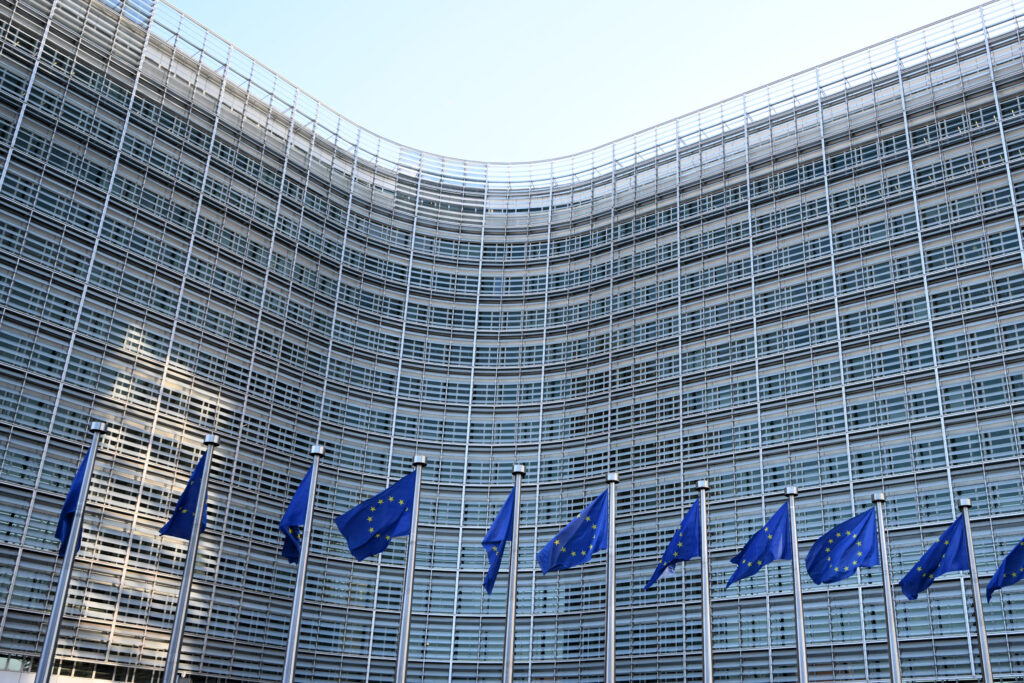
BRUSSELS — Nearly half of EU exports containing steel and aluminum are at risk of higher U.S. duties under President Donald Trump’s latest tariff overhaul, according to an early European Commission assessment.
The Trump administration reshuffled steel, aluminum and copper duties in early April, basing the levies on the full value of products instead of their metals content.
The new approach has reduced the overall value of EU exports affected by the tariffs to an estimated €52 billion annually from €67 billion, several European officials told POLITICO, citing a preliminary evaluation shared with EU capitals and lawmakers.
Yet of that reduced total, around €23 billion in exports are characterized as a “mixed bag” that could face higher tariffs under the new rules, the officials said.
The revision followed a Supreme Court ruling in late February that struck down Trump’s original “reciprocal” tariffs, forcing Washington to find other ways to maintain pressure on its trading partners.
The steel and aluminum tariffs are levied under Section 232 of the Trade Expansion Act of 1962, which allows duties if product imports threaten national security. These were not covered by the Supreme Court decision.
The Trump administration revised the tariffs on steel and aluminum after U.S. officials and business groups said they were struggling to assess the metal content of an ever-growing catalog of derivative products that are subject to the duties. The list was widened by more than 400 product codes last August.
The U.S. currently levies a 50 percent tariff on steel and aluminum imports.
The European Commission, in particular, has sought to exclude steel products from the duties altogether or to lower the applicable rate to 15 percent, in line with a tariff cap set in a trade accord reached last July at Trump’s golf resort in Turnberry, Scotland.
Trade Commissioner Maroš Šefčovič raised those issues in Washington last week with his U.S. counterparts, including Trade Representative Jamieson Greer. The EU trade chief sought to project confidence on the status of the deal after the meeting, telling reporters that he “was reassured by Ambassador Greer, by all my interlocutors, that a deal is a deal for both sides.”
The transatlantic accord has yet to take effect, with EU institutions still negotiating to finalize enabling legislation.
Ups and downs
In its preliminary evaluation, the EU executive found that of the €52 billion worth of EU products covered by Trump’s latest proclamation, €28.3 billion will benefit from lower tariffs, four European officials familiar with the assessment told POLITICO.
That includes €17.6 billion worth of products that were removed from the tariff list entirely and €10.7 billion that are subject to the 15 percent tariff cap, they added.
This leaves more than €23 billion in exports that don’t benefit from the relief and that will be subject to higher tariffs than before.
Trump’s new tariff structure sets three tiers. The first is a 50 percent tariff on raw steel, aluminum, copper and products that are made entirely from the metals, such as piping or nails, as spelled out in his April 2 proclamation.
The second is a flat 25 percent tariff on “derivative” products made substantially from the metals, like gas stoves or air conditioners. A third, 10 percent tier covers products made abroad that contain metal of American origin; the lower rate is designed to reward foreign manufacturers that source from the U.S.
Products containing less than 15 percent of steel, aluminum or copper will be exempt from the Section 232 tariffs.
“The Trump administration is pursuing a nimble strategy to bring back critical manufacturing back to the United States, including targeted tariff adjustments to combat duty evasion, simplify compliance, and incentivize increased steel and aluminum production capacity in the United States,” a White House official said.
Short runway
The changes took effect on April 6 — just four days after Trump signed the proclamation — giving exporters and customs officials on both sides of the Atlantic little runway to adjust.
The imposition of higher tariffs on such a large share of EU exports has further raised concerns in Brussels. EU member countries, lawmakers and the Commission are already at odds over whether to attach additional safeguards to the Turnberry agreement after Trump threatened in January to invade Greenland, a Danish protectorate.
European lawmakers, backed by France, want to attach a “sunrise” clause that would delay implementation of the accord until the U.S. tariffs on steel and aluminum derivative products are brought down.
Trump’s April 2 announcement “is not fulfilling the expectation of the European Parliament. For us, it is clear that these products should not be tariffed more than 15 percent, in line with the Scotland Deal,” said Bernd Lange, who chairs the European Parliament’s trade committee and is the lead lawmaker on the EU-U.S. trade deal.
The White House official said that reshoring was a clear goal of Trump’s “America First” trade policy and at the forefront of all negotiations with trading partners, “including with the European Union, with whom we run our largest trade deficit, and we look forward to the EU fully implementing its commitments under the Turnberry agreement.”
The European Commission declined to comment.
Camille Gijs reported from Brussels and Ari Hawkins reported from Washington. Daniel Desrochers in Washington contributed reporting. This article has been updated.

Europa Monitor is a seasoned News Editor with over a decade of experience in journalism. Known for his editorial expertise and commitment to accuracy, Europa Monitor leads teams to deliver high-quality news content.