The EU is making its move to put a European in charge of one of the most powerful jobs in the United Nations for the first time in half a century.
Whether it can agree on whom that should be is another matter.
The race to lead the Food and Agriculture Organization is officially underway. The winner takes over in 2027, running the U.N. body that sets global standards for food safety, manages the rules on fishing and deforestation and advises governments on how to feed their populations. For the EU, the stakes are unusually high.
No European has led the FAO in 50 years. The last time the bloc tried to change that, in 2019, it failed to rally enough support behind its candidate, split the western vote and handed the job to China’s Qu Dongyu, who has spent the years since filling the organization’s key posts with Chinese nationals and steering its agenda in directions that have alarmed Western donors.
Now, with his final term ending next year, the EU is trying again.
It has three candidates, no clear front-runner and a field that includes a scandal-tainted former commissioner, a Rome insider with a proximity problem and a Spanish minister who has been in government for so long, diplomats jokingly describe him as the Sergey Lavrov of EU agriculture ministers, as seemingly permanent as the Russian foreign minister.
What could possibly go wrong?
The comeback candidate
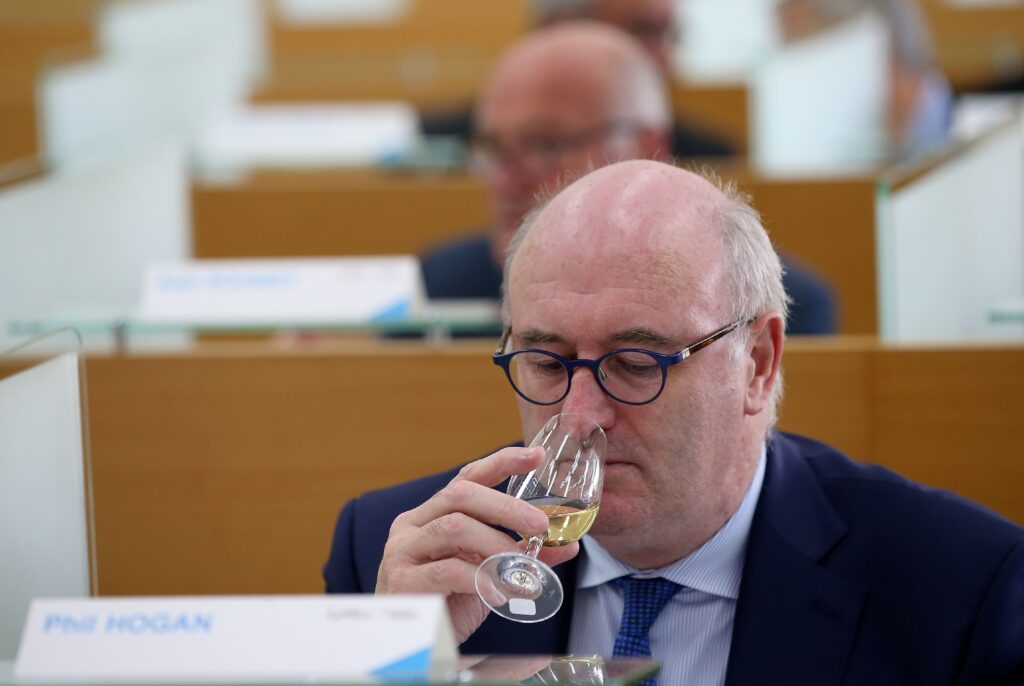
Phil Hogan is, by any measure, the heaviest hitter in the field. The former EU agriculture and trade commissioner pushed through a sweeping overhaul of farm subsidies and helped shepherd the Mercosur trade deal through years of stalled talks. He knows how to work a room, and he knows how to close.
He also knows how to make enemies. He was forced to resign from the Commission after attending a Covid-era golf dinner that broke public health rules and triggered a political storm. Since then, he has built a career advising multinational corporations. It’s a background that raises questions about where his instincts lie when trade liberalization meets the interests of farmers in the developing world.
Ireland has formally nominated Hogan, but only after weeks of deliberations, a hesitancy that did not go unnoticed in Rome. Nonetheless, he already has a powerful backer, with France offering an early endorsement. And his Irish passport is an asset in Washington, where goodwill toward Dublin runs deep and U.S. support still moves votes.
The insider in the corridor
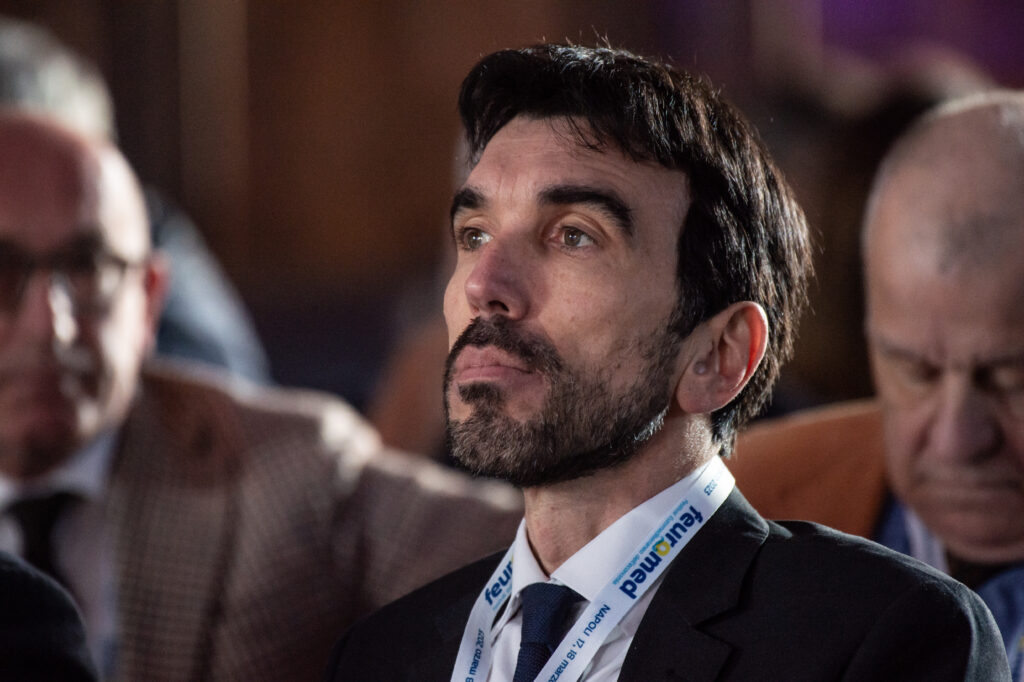
Maurizio Martina has a different kind of advantage. He is already in Rome. Currently a deputy director-general at the FAO, the former Italian agriculture minister knows the organization’s machinery better than any of his rivals, including who is influential, where decisions actually get made and how to navigate the labyrinthine U.N. ecosystem.
The problem is the same thing that makes him an insider also makes him a liability. Some member states see him as too close to Qu — not exactly an asset when the whole point of the exercise is to change the direction of the organization. Italy hosting the FAO helps, but it also triggers an unwritten rule: the head of a U.N. body probably should not come from its host country.
Then there is the political curiosity. A former secretary-general of Italy’s center-left Democratic Party, Martina secured his nomination from Giorgia Meloni’s right-wing government, a hint of his ability to build bridges across political divides.
The safe pair of hands
Luis Planas does not generate headlines. The Spanish agriculture minister has spent decades accumulating the kind of quiet institutional capital that rarely makes the front page. His past postings include ambassador to Morocco, permanent representative to the EU and secretary-general of the European Economic and Social Committee. It’s a résumé built largely on not making enemies.
He is also, crucially, the only one of the three still serving in government. Planas has been Spain’s agriculture minister since 2018, longer by a large margin than any of his EU counterparts, which is what earned him the Lavrov comparison among Brussels diplomats. When EU agriculture ministers gather in Cyprus in the coming weeks for talks that could prove pivotal in narrowing the FAO field, Planas will be at the table. His rivals will be working the margins.
His government’s foreign policy is an asset, too. Spain’s support for Palestinian statehood and its pointed criticism of Washington have made Madrid one of the more popular Western governments elsewhere in the world. In a race won by coalition-building, that currency matters. It is less useful, however, with the White House itself, which has taken note of exactly those positions.
The rest of the world is watching
There is, it should be noted, a fourth candidate from the European regional group.
Turkey’s President Recep Tayyip Erdoğan has nominated former agriculture minister Mehmet Mehdi Eker. Ankara’s role as a geopolitical bridge between East and West gives Eker a certain appeal in a contest decided by the whole world. He was also, notably, the first candidate officially in the race.
Africa’s main contender is Angola’s Josefa Sacko, former African Union commissioner for agriculture. If elected, she would be the first woman to lead the organization in its 80-year history. But Morocco is weighing its own entry, potentially Ismahane Elouafi, the former FAO chief scientist who left the organization after a falling out with Qu over the role of science in decision-making. Two African candidates would split the continent’s votes and hand an opening to others.
Latin America has its eyes on a bigger prize. With the U.N. secretary-general post falling vacant at the end of this year, the region is focused on landing that job, and has quietly told the EU it should go hard for the FAO instead. In the unwritten rules of multilateral rotation, you don’t chase two top jobs at once. The EU’s turn at the FAO, Latin American diplomats have suggested, is now.
In Washington, meanwhile, nearly 100 U.S. farm groups are pushing President Donald Trump to enter his own candidate, arguing that the United States has never led the FAO despite pumping money into it.
The fight is on
The FAO director-general is elected by 194 members — 193 countries plus the EU — each with one vote, in a secret ballot. No televised debates, no public campaigning. Candidates spend months flying around the world, shaking hands, making promises and quietly building alliances.
Think less democratic election, more diplomatic speed dating. “A beauty contest, but for people who care deeply about soil health,” said a European Commission official who has worked on food policy. An EU diplomat familiar with the process reached for a more Roman analogy: the conclave to elect the pope. “A bit more transparent,” they said. Though not by much. Both people were granted anonymity because they were not authorized to speak publicly.
The job is also more powerful than it looks. The director-general runs an organization of around 15,000 staff with virtually unlimited power, appointing officials and shaping the global agenda on food and farming largely as they see fit.
That is precisely why Western donors want it back. Under Qu, critics say, the FAO has increasingly served as a vehicle for Chinese foreign policy priorities rather than its broader multilateral mandate. And when Russia invaded Ukraine in 2022, the organization spent weeks referring to it as a “special military operation.”
“Having a meeting with him is like having a meeting with Trump,” the EU diplomat said. “And a little bit worse.”
Qu has consistently rejected the criticism, insisting that the FAO’s job is technical, not political. But the damage to the organization’s credibility among its biggest donors is real, and the funding pressure is mounting. The U.S. is pulling back from multilateralism more broadly; other donors are cutting costs. The next director-general will be asked to do more with less.
“With the retreat of the U.S. from U.N. multilateralism, power dynamics are in flux,” said Sebastian Haug, a senior researcher at the German Institute of Development and Sustainability. “The next FAO director-general will be in a key position to co-shape the future of the U.N.’s work on food and agriculture.”
But unity alone will not be enough. In 2019, even combining the votes of Western-backed candidates would not have beaten Qu. The EU needs wider support, and that requires a candidate the world actually wants, not just one the bloc can agree on.
It has a few months to find one.

Europa Monitor is a seasoned News Editor with over a decade of experience in journalism. Known for his editorial expertise and commitment to accuracy, Europa Monitor leads teams to deliver high-quality news content.