
The U.K. and Poland signed a defense deal on Wednesday, adding to a growing list of bilateral European security pacts prompted by Russia’s war in Ukraine.
Under the Northolt Treaty, the two countries pledged to develop medium-range air defense missiles, deepen cooperation on tackling Russian hybrid threats, bolster joint procurement, ramp up military exercises and restated their commitment to “assist one another” in case of an armed attack. They also agreed to deepen ties on energy and climate, economic security and migration.
British Prime Minister Keir Starmer lauded the pact as a “generational uplift” of defense cooperation, “reinforced as we face the challenges of today.” Polish Prime Minister Donald Tusk said the deal would help “secure Poland and other countries against the Russian threat.”
Warsaw and London will also work on a new joint action plan on irregular migration that “will discuss how to boost border security and dismantle organised crime groups,” according to the treaty.
The agreement, which builds on similar pacts between the two countries signed in 2017 and 2023, is the latest in a long line of bilateral deals as European countries look to reinforce relationships with allies beyond NATO.
Of the 169 multilateral defense deals signed by EU countries, the U.K. and Ukraine since 2014, 135 were signed after Moscow’s all-out war began in 2022, with 36 signed in 2025 alone.
The continent’s biggest military powers — the U.K., France, Italy, Germany and Poland — are signing deals that bind their defense industries and militaries into a tighter web of cooperation. Poland plans to sign a similar deal with Germany next month.
Ed Arnold, a defense adviser at The D Group consultancy and a former NATO official, said the Northolt agreement is part of a broader effort by Starmer to realign Britain with the EU, and could help signal demand to defense companies for greater production in both countries.
Yet the text, which he argued is “deliberately … vague on detail,” has few granular obligations and adds little to previous iterations. It’s more about London showing it is stepping up on defense despite repeated delays to its defense investment plan. “It’s a lot of politicking,” Arnold said.
Although the text aims to bolster “co-operation between NATO and the EU,” it may backfire with Brussels, he added. “The EU really doesn’t like these types of things, because they do not like the U.K. cherry picking and dealing on a bilateral level with member states.”
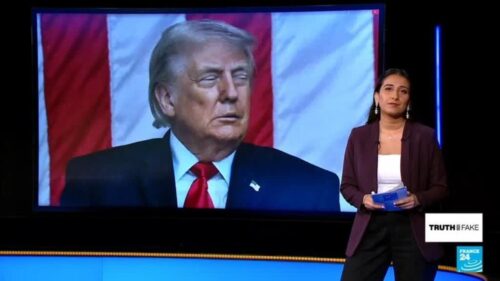
While the agreement on paper recognizes NATO as the “foundation of collective defence,” the treaty reflects growing uncertainties about the health of the military alliance in response to repeated threats by Donald Trump, Arnold said.
Rather than just rely on NATO, such pacts help “bind certain countries into frontline states,” he said. “One of the reasons that you’re seeing more of these agreements is the fact that there’s more and more question marks over NATO — and particularly the U.S. backing of NATO.”
The U.K. Ministry of Defense didn’t immediately respond to POLITICO’s request for comment.

Europa Monitor is a seasoned News Editor with over a decade of experience in journalism. Known for his editorial expertise and commitment to accuracy, Europa Monitor leads teams to deliver high-quality news content.